
Emergency General Contractor Near Me: What Morgan Hill Homeowners Should Do First
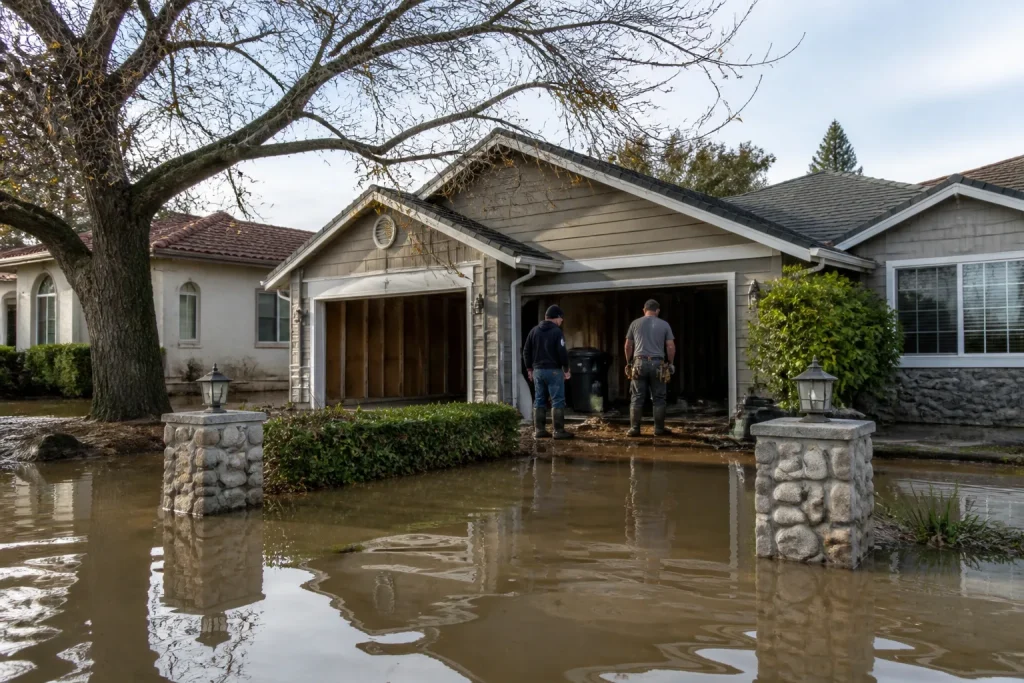
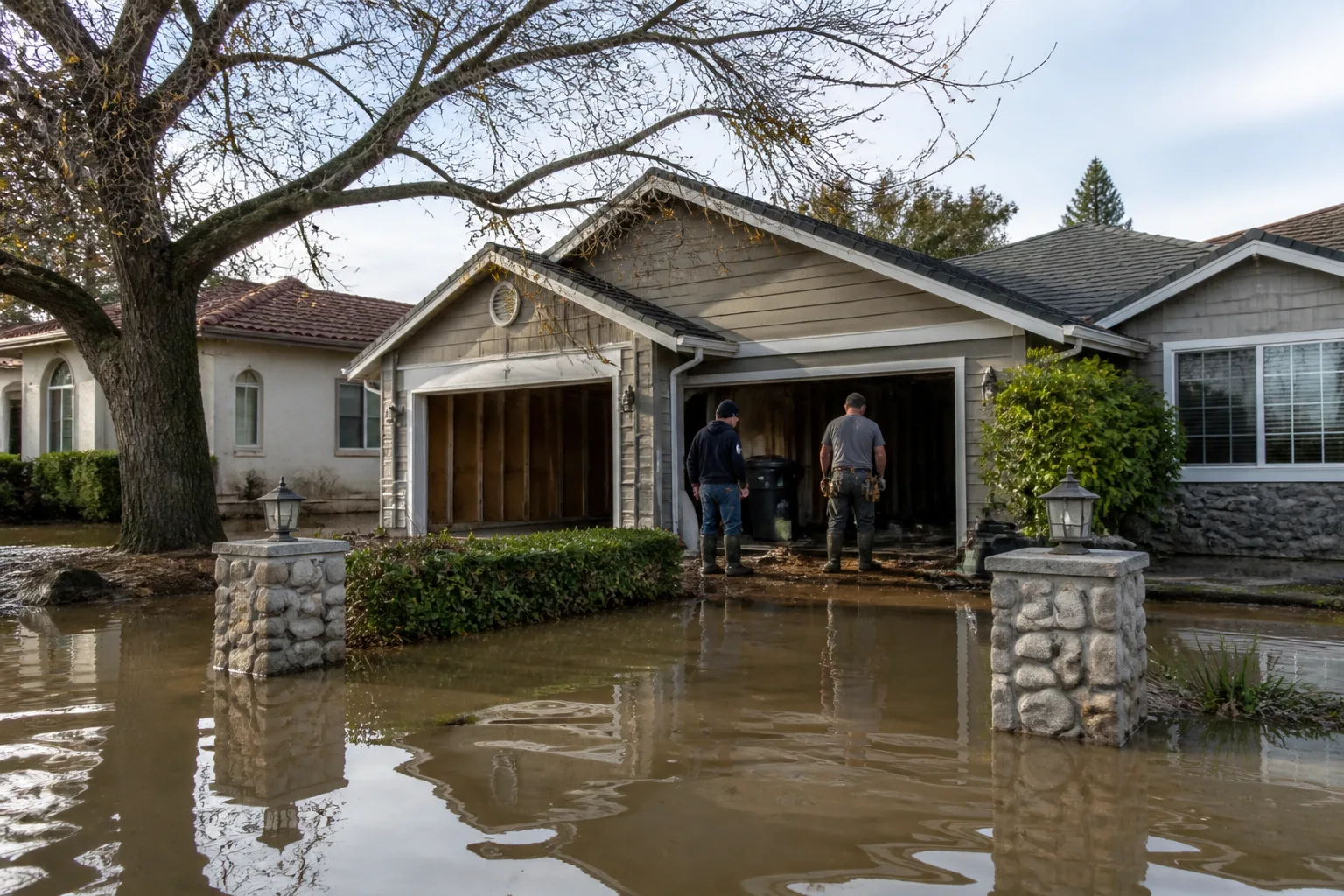
If you’re searching “emergency general contractor near me” in Morgan Hill, you’re likely standing in front of water where it shouldn’t be, a hole in your roof, or a crack in your foundation. The direct answer: don’t call a contractor first. Call your insurance carrier, shut off the water or gas if you can do so safely, and document everything before anyone starts pulling drywall or tarping the roof. Get the sequence wrong and you can lose tens of thousands of dollars on your claim. If you’d rather hand the whole thing to someone who manages the sequence for you, call (833) 725-3508.
Why the First 90 Minutes Decide Your Claim
After a pipe burst floods your subfloor or a tree takes out a section of roof over your Morgan Hill home, the worst thing you can do is immediately call a contractor. Not because you don’t need one. You absolutely will. But the sequence of calls before that one determines whether your insurance covers $80,000 or $12,000.
Here’s what we’ve seen repeatedly in Morgan Hill neighborhoods like Jackson Oaks and the hillside homes off East Dunne Avenue. A homeowner wakes up to water pouring through the ceiling. They panic. They call the first “emergency general contractor near me” that pops up. That contractor sends a crew, starts cutting out wet drywall, hauls debris to the curb, and installs a temporary patch. Three weeks later the adjuster arrives and can’t see the full extent of the original damage. The carrier scopes the repair at a fraction of the actual cost. The homeowner eats the difference.
We pulled one out of a garage in Jackson Oaks last year where exactly that happened. The homeowner’s carrier approved $9,000 on a repair that needed $27,000 by the time we opened the walls and found the water had wicked up the insulation into the ceiling cavity. The initial demolition destroyed the evidence that would have justified the larger claim.
The correct sequence for Morgan Hill homeowners:
- Ensure safety first. If there’s standing water near electrical outlets, if you smell gas, or if the structure is visibly compromised, get out. Call 911 if there’s any doubt.
- Shut off utilities you can safely reach. Water main at the street or at the house. Gas at the meter if you smell gas. Electrical at the panel if water is near outlets. If you’re unsure, wait for PG&E or the fire department.
- Call your insurance carrier. Not an agent. Not a broker. The carrier’s claims line. Start the claim now, before any contractor touches anything.
- Photograph and video everything. Every room. Every wall. Every ceiling. Go slow. Wide shots, then close-ups. Your phone’s timestamp is fine. Do this before moving furniture, before lifting wet carpet, before opening walls.
- Then, and only then, call the contractor. And when you do, make sure you’re calling a licensed GC, not a storm-chaser.
Storm-Chasers vs. Licensed GCs: What to Watch for in Morgan Hill
After a storm rolls through Morgan Hill, or after a major water event, you’ll see trucks circulating neighborhoods like Paradise Valley and the streets east of Monterey Road. Some of those trucks belong to legitimate restoration companies. Some belong to what the industry quietly calls storm-chasers: crews that follow disaster maps from state to state, knock on doors, and offer “free assessments” with a signature line at the bottom.
Here’s the difference that matters. A licensed general contractor in Morgan Hill is accountable to the California Contractors State License Board. We carry a contractor’s license tied to a physical business address. We pull permits through the Santa Clara County building department. We send crews who work under our license and our insurance. If something goes wrong, you know where to find us.
A storm-chaser may or may not be licensed in California. Many are not. They may hand you a contract that assigns your insurance benefits to them, then perform work the adjuster never approved, then place a lien on your home when the carrier refuses to pay. This happens in Morgan Hill more than people realize, particularly after the atmospheric river events we’ve seen over recent winters.
Questions to ask anyone who knocks on your door after a disaster:
- Show me your California contractor’s license. Right now, not later.
- Are you the contractor, or are you a marketing company that will sell my job to someone else?
- Will you be present for the insurance adjuster’s walkthrough? In person?
- Can I call your last three local references today?
- What’s your physical office address in or near Morgan Hill?
Legitimate contractors can answer every one of those without blinking. Storm-chasers start hedges, delay, or go dark.
What a Legitimate Emergency GC Scope Actually Looks Like
Here’s where many Morgan Hill homeowners get confused, and understandably so. The phrase “emergency general contractor” sounds like it means someone who shows up and starts rebuilding your kitchen that day. It doesn’t. A legitimate emergency GC scope has three distinct phases, and they should not be mixed.
Phase one: temporary stabilization. This is weatherproofing, structural shoring, and safety work. Tarping a roof that’s open to the sky. Boarding a window that a tree limb went through. Pumping out standing water and setting dehumidifiers. Installing temporary support posts under a sagging beam. The goal is simple: stop the damage from getting worse and keep the house safe to enter.
Phase two: scope documentation. This is where the GC walks the property with the insurance adjuster, identifies every affected area, and writes a line-item scope of work that matches the actual damage. A good GC documents what’s behind the walls, not just what’s visible. We open small inspection holes if needed. We photograph the cavity. We note materials, measurements, and code requirements. Then we submit that scope to the carrier for approval.
Phase three: full reconstruction. This starts only after the carrier approves the scope and releases the funds. This is the phase where a company like Brookside Contractors home actually performs the work: framing, drywall, flooring, cabinetry, paint. Phase three is a construction project, not an emergency response.
The problem happens when contractors mix phases one and three. They start “just cutting out the wet stuff” and accidentally do demolition work that destroys evidence, or they begin rebuilding before the adjuster has signed off. Then the claim gets denied and the homeowner is on the hook. Insist on a clear, written project plan that separates temporary stabilization from approved reconstruction. Any legitimate GC will happily provide one.
The Adjuster Walkthrough: Why Your GC Should Be in the Room
Insurance adjusters in California are overloaded. The average adjuster carries far more claims than they can thoroughly investigate, and the pressure comes from the top to close files quickly. That’s not a conspiracy theory. It’s how the business works.
When an adjuster walks through your water-damaged Morgan Hill kitchen alone, they’ll see what’s obvious: wet drywall, warped flooring, a stained ceiling. They may not see what’s behind those surfaces, and their software-generated scope will reflect line items for surface-level repair. Remove and replace drywall. Paint. Maybe replace flooring if the water clearly reached it.
When your GC is present for that walkthrough, the conversation changes. A competent contractor can point to the baseboards and say, “Look at the capillary wicking here. The water traveled up the wall cavity. That insulation is saturated. The electrical boxes in this wall are now suspect. That subfloor is OSB and it’s already swelling.” Each of those observations translates to a line item that the adjuster must consider.
We’ve sat in on adjuster walkthroughs in Morgan Hill homes near the downtown corridor where the carrier’s initial estimate came in at $14,000 and the final approved scope was $43,000. The difference was documentation and advocacy, not argument. Contractors who work with insurance carriers understand the language adjusters use and the documentation they need. We know what triggers a re-inspection. We know how to submit a supplemental claim when the inevitable hidden damage surfaces mid-project.
Your homework: before the adjuster arrives, walk your property with your contractor. Make a room-by-room list. Photograph the same areas from the same angles on a single day so timestamps align. Note any pre-existing conditions honestly, because adjusters can and do check Google Street View and prior sales listings. If you’re honest about what was damaged before the event, your credibility on the new damage goes up.
Morgan Hill Emergency Resources: Numbers, Codes, and What Triggers Re-Occupancy
Morgan Hill is unincorporated Santa Clara County in some pockets and city jurisdiction in others. The building department that governs your address depends on exactly where you live. West of Highway 101 toward the hills is often county jurisdiction. East of downtown and most of the newer developments fall under city purview. A legitimate local contractor knows which department governs your address without having to look it up.
Santa Clara County building department: The county runs a 24/7 emergency inspection line. For post-disaster structural concerns, you can request an emergency inspection and a county inspector will come out, often the same day, to assess whether the structure is safe for occupancy. This is especially important after tree impacts, mudslide events, or earthquake damage on the hillside lots south and west of Morgan Hill.
PG&E: For gas leaks, downed power lines, or suspected electrical hazards, call PG&E’s emergency line ((833) 725-3508). Do not re-enter a structure with a suspected gas leak until PG&E has cleared it.
Water service: Morgan Hill’s water is provided by the city’s water division for most properties. If your main shutoff is inaccessible or damaged, the city can shut water at the meter.
What triggers mandatory inspection before re-occupancy: If the damage involves structural members (beams, posts, bearing walls, foundation), if the electrical panel was submerged, if gas lines were displaced, or if more than 25% of the roof structure is compromised, you’re almost certainly looking at a mandatory inspection before anyone can legally live in the home. In Morgan Hill, that inspection comes through the county or city building department depending on your address. A licensed GC will know which applies to your property.
Here’s a useful shortcut: if you’re unsure whether your damage triggers inspection, call the building department and ask. They’d rather answer your question than discover unreinforced work later. And if you’re working with a contractor who tells you to skip the permit process and “just fix it quietly,” that’s your signal to find a different contractor.
Key Takeaways
- Safety first, utilities second, insurance third, contractor fourth. That’s the sequence, and getting it backwards can cost you your claim.
- Photograph everything before anyone touches the site. Your phone is the most valuable tool you own in the first 90 minutes.
- Verify licenses. Any contractor working on your Morgan Hill home must hold a valid California contractor’s license. Ask to see it. Check the CSLB database.
- Keep temporary stabilization separate from reconstruction. Boarding, tarping, and shoring are emergency work. Framing, drywall, and cabinetry are construction. Don’t mix them before the adjuster signs off.
- Your GC should attend the adjuster walkthrough. This alone can add tens of thousands of dollars to an approved claim.
- Morgan Hill is split across city and county jurisdictions. A local contractor will know which building department governs your address and which permits apply.
When to Call a Pro
You can handle the first-tier items yourself: photographing damage, calling your carrier, shutting off water at the main if it’s accessible. But the moment the conversation turns to structural assessment, water extraction, electrical safety, or anything involving load-bearing elements, stop and call a licensed contractor. The stakes are too high to guess, and Morgan Hill’s hillside homes are especially unforgiving of DIY structural repairs. A wrong decision on a foundation crack can become a six-figure problem within a season.
Related services in Morgan Hill: if your emergency involves significant interior reconstruction, our home remodeling services team handles full-scope rebuilds. For structural and exterior work, our home renovation services cover roofing, siding, windows, and foundations. If you’re in neighboring Los Gatos, our general contractor services in Los Gatos serve that market as well.
The Bottom Line
An emergency at your Morgan Hill home is a test of sequence, not speed. The homeowners who recover fully from a disaster are the ones who document carefully, notify their carrier immediately, and bring in a licensed contractor who understands both construction and the insurance process. The homeowners who lose are the ones who skip steps, hire the first truck that shows up, and sign documents they didn’t read.
If you’re in Morgan Hill and need help, Brookside Contractors offers free estimates and we’re happy to walk you through the emergency documentation process even before you’ve decided who to hire. Call (833) 725-3508. We’re a full-scope general contractor serving Morgan Hill and the surrounding South Bay area, and we’ve helped homeowners through everything from ceiling collapses to full reconstruction after water events.
Frequently Asked Questions
Call your insurance carrier first, document the damage with photos, and then call a contractor. Water damage from a burst pipe or roof leak is not an issue where waiting 60 to 90 minutes to follow the correct claim sequence will meaningfully worsen the outcome. Mold becomes a concern after 48 to 72 hours, not in the first few hours. The insurance sequence is more important than a same-hour contractor response. Call (833) 725-3508 after you’ve spoken with your carrier and we’ll help with the documentation process.
Emergency stabilization work, like tarping a damaged roof or boarding a broken window, typically runs between $800 and $2,500 depending on the size of the opening and the height of the roof. Water extraction and drying equipment for a typical flooded room runs between $2,000 and $5,000. Full reconstruction costs depend entirely on the scope, but we write line-item estimates before any reconstruction begins so you know exactly what the project will cost. Estimates are free. Call (833) 725-3508.
That depends on your policy, your deductible, and how well the damage is documented. Most California homeowner policies cover sudden and accidental water damage, fire damage, and storm damage, minus your deductible. The biggest factor that reduces payouts is poor documentation or demolition performed before the adjuster sees the site. A contractor experienced with insurance claims can help you document the full scope before anything is removed. If you’re unsure whether your carrier will cover the work, call (833) 725-3508 and we’ll help you understand what to submit.
Temporary stabilization like tarping, boarding, and shoring generally does not require a permit. Full reconstruction work almost always does, especially if it involves structural elements, electrical, plumbing, or significant roof replacement. A licensed general contractor will know which permits apply to your specific address whether you’re in city or county jurisdiction and will pull them for you. We handle permits and inspections for every project, so the process is seamless on your end. Call (833) 725-3508 to discuss your specific situation.
Written by the team at Brookside Contractors, serving Morgan Hill since 2011.
Need Construction Help?
Call Brookside Contractors — licensed & insured, here with fast after-hours help in Morgan Hill.
(833) 725-3508