
Last updated October 30, 2026
 Home additions & ADU
 Kitchen remodeling
 Bathroom remodeling
 Roofing
 Windows & doors
 Driveway & pavers
 Fence
Free written scope consultation - allowances, timeline, and change-order rules on paper before a single trade is scheduled
Construction Warning Signs: A Morgan Hill Homeowner’s Reference Guide
The crack that costs $400 to fix and the crack that costs $40,000 to fix can look identical to a homeowner. What separates them is pattern, location, and rate of change. Most construction warning sign guides stop at the obvious: a bowing wall, a sagging roofline, a window that won’t close. But the problems that quietly drain equity from Morgan Hill homes are the ambiguous ones: the hairline crack that reappears after patching, the door that only sticks in August, the musty smell in a room with no visible water. This guide teaches you to read those signals the way a contractor does, so you can separate routine maintenance from structural intervention before a small issue becomes a budget line item you never planned for. For more guides & resources on protecting your home, explore our blog.
Quick Answer
Construction warning signs in Morgan Hill homes fall into five categories: structural movement (cracks, binding doors, separating trim), moisture intrusion (staining, warping, persistent odors), foundation stress from expansive clay soils, roof system aging, and utility wear (electrical, plumbing, HVAC). The single most important skill is pattern recognition: knowing whether a symptom is stable and cosmetic, or progressive and structural. When in doubt, a professional assessment costs far less than a delayed repair.
Styles & brands we work with
Table of Contents
- Reading Cracks: Pattern Analysis for Stucco and Drywall
- Expansive Clay Soils: Seasonal Movement vs. Settlement in Morgan Hill
- Hidden Moisture: Warning Signs That Don’t Look Like Water
- Reading Your Roof From the Ground
- Age Context: Why a 30-Year-Old Home Speaks a Different Language Than a 10-Year-Old
- Electrical, Plumbing, and HVAC Warning Signs
- Common Mistakes to Avoid
- When to Call a Professional
Reading Cracks: Pattern Analysis for Stucco and Drywall
A crack is not a crack is not a crack. The first question we ask on any Morgan Hill walkthrough is not “how big is it?” but “what shape is it, where is it, and has it moved recently?” Size without context tells you almost nothing. A quarter-inch horizontal crack along a stucco seam where two original pours met may be nothing more than thermal expansion doing what thermal expansion does. A hairline crack radiating diagonally from the corner of a window or door frame is a different conversation entirely.
Here’s how to read what you’re seeing:
- Stair-step cracks in stucco: These follow mortar joints in a stepped pattern and usually indicate differential settlement. In Morgan Hill, where expansive clay soils dominate many neighborhoods, stair-step cracking on one elevation while the opposite side shows nothing is a strong signal that one corner of the foundation is moving more than the others.
- Vertical cracks wider at top than bottom: This pattern often points to a footing issue at one end of a wall section. The wider top means the upper portion is pulling away faster, suggesting rotation of the foundation element below.
- Horizontal cracks along drywall tape lines: These are typically truss uplift or thermal movement, common in Morgan Hill’s hot summers when attic temperatures climb. If they open in summer and close in winter, you’re looking at seasonal behavior, not structural failure.
- Diagonal cracks from window corners: Windows create a stress concentration in wall framing. Cracks radiating from corners at roughly 45 degrees suggest the header or framing around the opening is flexing. In older Morgan Hill homes with original wood framing, this can indicate long-term load redistribution.
- Cracks that reappear after patching: The single most useful diagnostic in construction. If you patch a crack and it returns within 12 months, it is active. Active cracks require a structural assessment, period.
We’ve walked Morgan Hill homes where a homeowner had patched the same stair-step crack three times in five years, each time assuming the repair job was poor. The repair was fine. The foundation was still moving underneath it. That’s the difference between treating a symptom and diagnosing a cause.
Expansive Clay Soils: Seasonal Movement vs. Settlement in Morgan Hill
Morgan Hill sits on some of the most geotechnically active soils in Santa Clara County. The clay-rich soils that make the region’s agriculture so productive also happen to expand dramatically when wet and shrink when dry. For a foundation, that means the ground beneath your home is never fully still. The question is not whether it’s moving, but whether it’s moving in a predictable seasonal cycle or settling progressively in one direction.
Seasonal movement is normal in Morgan Hill. Homes rise slightly in wet winter months as soil swells with moisture, then settle back in the dry summer months. This cycle produces hairline cracks that open and close, doors that bind in August and free up in January, and minor slab heave that shows up as slightly uneven floors. None of this is inherently alarming. It’s the soil doing what it’s done for millennia.
Progressive settlement is different. Settlement is a one-way trip: a corner or edge of the foundation drops and does not return. Warning signs of progressive settlement in Morgan Hill include:
- Doors that bind and never unbind: A door that sticks in summer and works in winter is seasonal. A door that sticks every month and is getting harder to open is settlement.
- Cracks that widen year over year: Measure and date your cracks. A photo with a ruler beats memory every time. If the same crack is an eighth of an inch wider next summer, that’s not seasonal.
- Gaps opening between walls and ceiling on one side of the house only: Differential settlement shows up as asymmetry. One side of the house moving while the other stays put puts visible stress on wall-to-ceiling joints.
- Windows becoming hard to operate: As frames rack out of square, windows that once glided start sticking, especially on upper floors.
- Exterior brick or stone veneer separating from the wall behind it: Where veneer pulls away from the substrate, the underlying structure has moved enough to break the bond.
The practical takeaway for a Morgan Hill homeowner: if a symptom reverses itself seasonally, you have time and options. If it only moves in one direction, you need a structural evaluation sooner rather than later. A geotechnical engineer or an experienced structural contractor can tell the difference in a single visit.
Hidden Moisture: Warning Signs That Don’t Look Like Water
The most expensive water damage in Morgan Hill homes never pooled on a floor. It lived behind walls, under cabinets, and inside ceiling cavities, doing its damage quietly until the repair bill became six figures. The key is recognizing the indirect signals moisture leaves before it becomes a visible stain.
Musty air with no visible source: If a room smells like a basement and you don’t have a basement, there’s moisture somewhere. The smell is microbial activity: mold, mildew, or rot fungi breaking down organic material. In a closed-up Morgan Hill home through a dry summer, that smell usually means a slow leak inside a wall cavity, a compromised plumbing joint, or infiltration at a flashing point that’s been wicking moisture for months.
Door binding in a house with no foundation issues: Wood swells when it absorbs moisture. Interior doors that suddenly stick in humid weather can indicate elevated moisture levels inside the house, not just outside. If multiple doors bind in the same building level, think water vapor or a hidden leak, not structural movement.
Paint behavior: Paint speaks clearly if you know the dialect. Bubbling paint on a ceiling means water is pooling above, usually at a roof penetration or plumbing line. Peeling paint on baseboards often means moisture wicking up from a slab or seeping in at the wall-to-floor junction. On windowsills, peeling paint typically means condensation or failed weatherproofing around the frame. Chalky, powdering paint on exterior walls in Morgan Hill can also indicate moisture trapped behind the stucco pushing salts to the surface: a condition called efflorescence that signals deeper water intrusion.
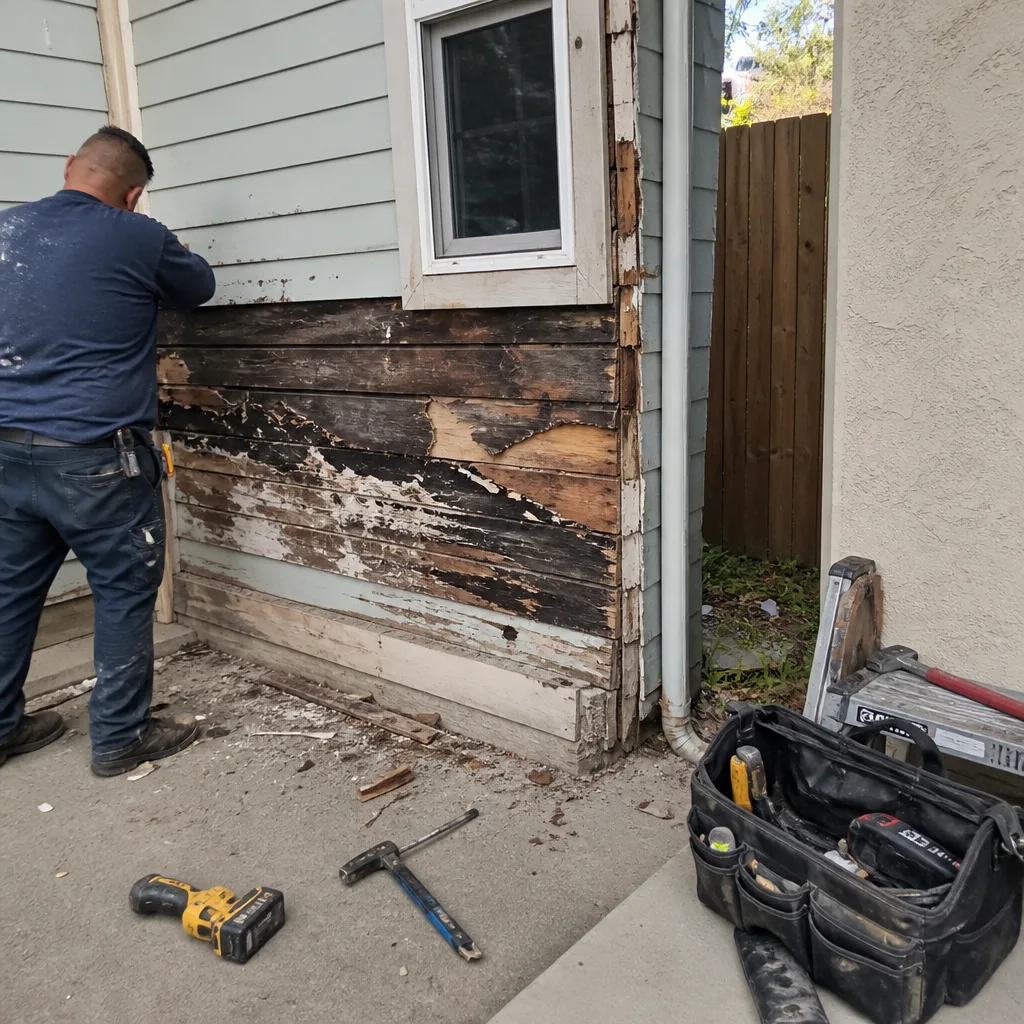
Trim and baseboard separation: When wooden trim pulls away from walls or baseboards develop gaps at corners, the wood has absorbed moisture and expanded, then dried and contracted. One isolated area could be anything. Multiple rooms on the same wall line suggest a plumbing or flashing issue behind the drywall.
None of these signs should trigger panic. They should trigger investigation. A moisture meter and a camera scope can locate a hidden leak in under an hour, and most Morgan Hill plumbing and home remodeling contractors carry both.
Reading Your Roof From the Ground
You don’t need to climb a ladder to perform a meaningful roof inspection. In Morgan Hill’s climate, where intense summer sun alternates with winter rain, most roofing problems announce themselves visibly to anyone standing in the driveway who knows what to look for. A pair of binoculars helps, but your eyes are the primary tool.
Start at the ridgeline. A straight ridge with crisp definition suggests the roof structure is holding its geometry. A ridgeline with a visible dip or wave means the underlying framing or sheathing has weakened, usually from moisture. That’s a structural issue, not just a shingle issue.
Then look at the shingle field itself:
- Curling or cupping shingles: Asphalt shingles curl upward or downward when they age past their effective life, typically 20 to 30 years depending on brand and installation quality. A handful of curled shingles on a hot slope is normal aging. Curled shingles across the entire roof face is a replacement-level condition.
- Missing granule coating: If the shingles look patchy or show dark spots scattered across the field, the mineral granules that protect the asphalt from UV radiation are wearing away. You’ll often see granules collecting in gutters below. On a Morgan Hill roof, granule loss accelerates during windy winters and signals a roof entering its final third of serviceable life.
- Moss or algae growth: Moss holds moisture against the shingle surface and can lift shingle tabs, allowing water underneath. In shaded Morgan Hill neighborhoods with heavy tree canopy, moss on north-facing roof slopes is common and should be addressed early.
- Dark streaks running down from penetrations: Around vent pipes, chimneys, and skylights, dark stains usually mean the flashing at the penetration has failed. Water is running down the underside of the roof deck and staining the shingle from below. This is often invisible from inside the attic until the damage is widespread.
- Visible sagging between rafters: On older Morgan Hill homes with 2×4 roof framing or insufficient sheathing thickness, you may see subtle dips between rafters when viewed from the ground at an oblique angle. This indicates the sheathing is delaminating or rotting from moisture and needs replacement, not just re-shingling.
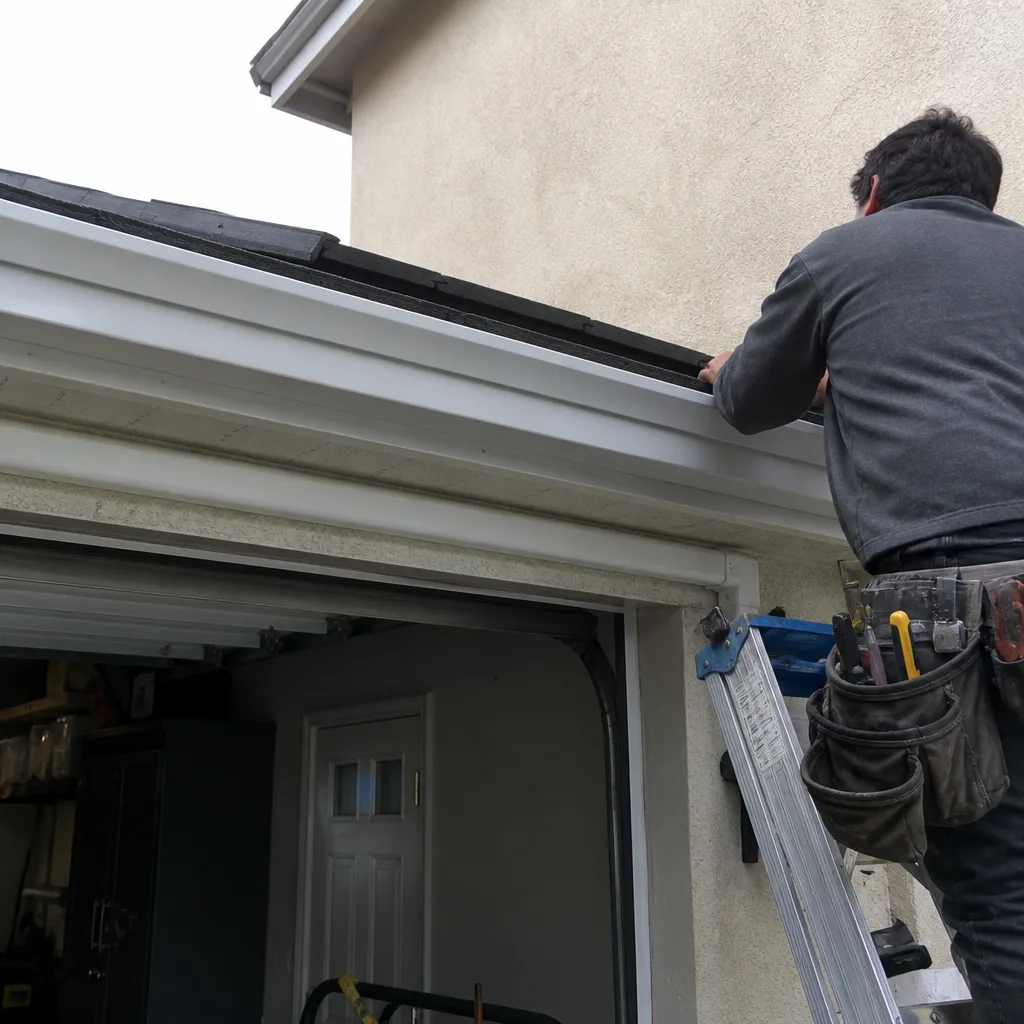
The threshold for professional assessment is not “the roof is actively leaking.” It’s “the weathering is advanced enough that a repair is no longer reliable.” If your roof is 20-plus years old in Morgan Hill and you’re seeing multiple of these warning signs, several general contractors offer free roof assessments that include ground-level and attic inspection without requiring you to climb anything.
Age Context: Why a 30-Year-Old Home Speaks a Different Language Than a 10-Year-Old
The same symptom means different things at different ages. Morgan Hill’s housing stock spans decades, from mid-century builds to recent subdivisions, and a crack in a 1985 ranch is not the same diagnostic signal as a crack in a 2015 two-story. Age context is the lens through which all other warning signs should be read.
In a home under 10 years old, what you’re looking for is installation defects and material failures. The structure itself should still be within its designed tolerances. Cracks in a newer Morgan Hill home are often the result of framing lumber drying and shrinking, which produces hairline drywall cracks at taped seams in the first two to three years. These are cosmetic and typically stabilize. But a diagonal crack from a window corner in a new home is more concerning, because the building hasn’t had time to accumulate the kind of long-term settlement that might otherwise explain it. In our experience, early failures in new construction usually trace back to a specific joint, flashing detail, or missed connection the original crew performed poorly, not to age-related degradation.
In a home 20 to 40 years old, you’re now in the zone of material life expectancy. Original roofing is due for replacement. Original water heaters have already failed once. Plumbing supply lines: especially galvanized steel in Morgan Hill homes from the 1970s and 1980s, are nearing the end of their useful life. Window seals are failing, leaving fogged glass and degraded insulation. Electrical systems may date from an era before modern load demands: think kitchens wired for one appliance when today’s homeowners run three at once. Cracks in a home this age require context: is this symptom new, or has this crack been stable for a decade? Age magnifies pre-existing flaws. A minor drainage issue that’s been slowly saturating soil behind a retaining wall for 20 years can suddenly present as wall failure one winter.
In a home over 50 years old in Morgan Hill, you may be looking at original construction predating current seismic code requirements. Foundations may be unreinforced, cripple walls may lack shear bracing, and roof-to-wall connections may be lighter than anything built today. Warning signs in these homes should be evaluated against the standard of “what was considered acceptable when this home was built” versus “what we understand about structural safety now.” Many older Morgan Hill homes are perfectly sound, but they require a different standard of inspection than newer construction.
PGT and CGI window lines, both of which we install, are excellent examples of how material upgrades can address age-related warning signs at the component level. A 30-year-old home with original single-pane aluminum windows showing condensation, drafts, and failed seals isn’t telling you the house is failing. It’s telling you the windows have completed their service life, and the upgrade path is well understood.
Electrical, Plumbing, and HVAC Warning Signs
Structural issues and moisture intrusion get the most attention in construction warning sign discussions, but the systems that keep a Morgan Hill home livable: electrical, plumbing, and heating/cooling, have their own warning language. Deciding whether to tackle these yourself or call a pro? Read our DIY vs Professional Construction: The Morgan Hill Homeowner’s Decision Guide. And because they operate out of sight, their early signals are often ignored until failure.
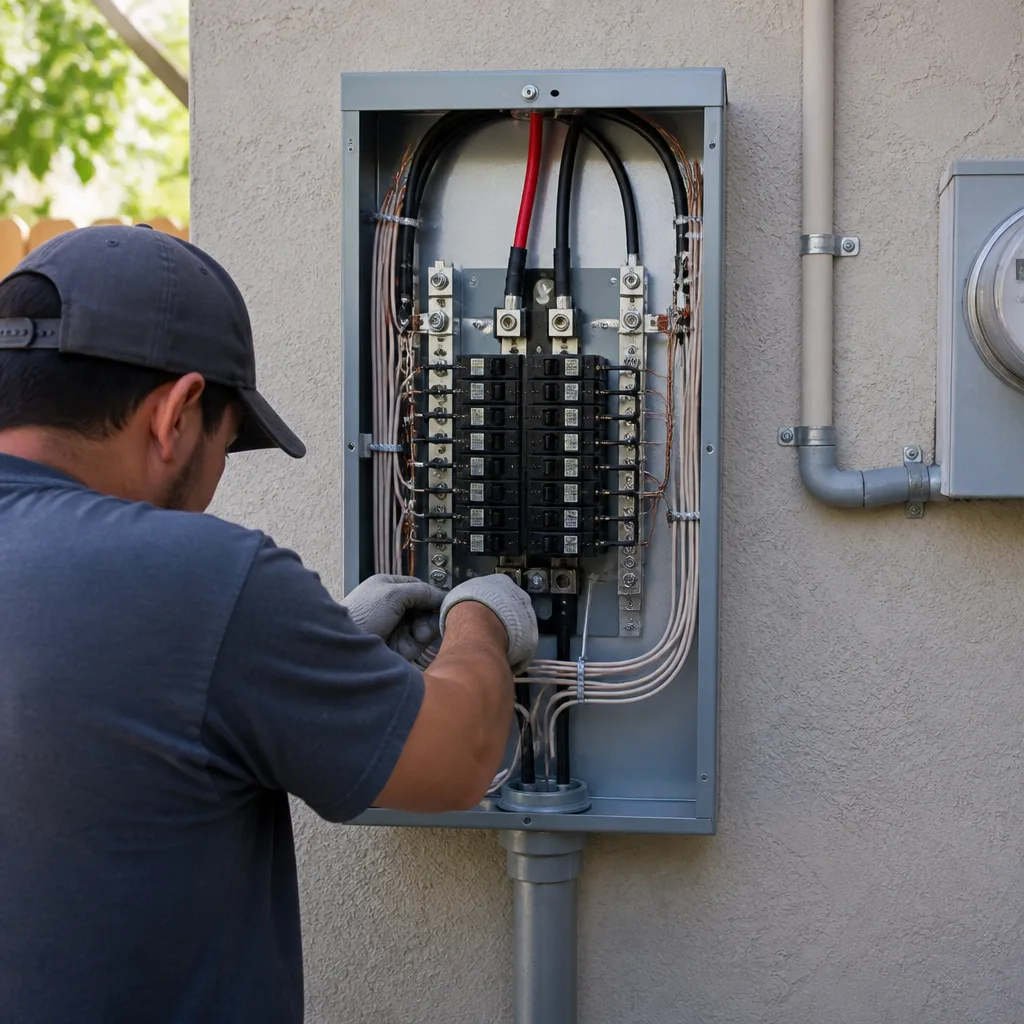
Electrical warning signs: Circuit breakers that trip repeatedly on the same circuit are not protecting you from a ghost: they’re protecting you from an overloaded wire that’s getting too hot. Flickering lights that affect multiple rooms at once often indicate a loose neutral connection at the panel or service entrance, which is a fire hazard. Warm outlets or switch plates, a mild burning smell near an outlet, and light bulbs that burn out unusually fast are all signs that something in the circuit is running hotter than it should. In Morgan Hill homes built before the 1990s, aluminum branch wiring is present in some properties and requires specific connection hardware to be safe. If your home has never had an electrical panel assessment, the warning signs are usually there before the failure.
Plumbing warning signs: A water bill spike with no change in usage is the quietest and most reliable indicator of a hidden leak. Low water pressure confined to one fixture often means mineral buildup in that fixture’s supply line. Low pressure throughout the house in an older Morgan Hill home can mean galvanized supply lines are internally corroded: the pipe rusts from the inside out, and by the time the problem is visible, the entire supply system may need replacement. Gurgling drains, especially when no fixture is running, indicate a venting problem that can allow sewer gas into the home. A faint sewer smell in one bathroom after windy weather often signals a dry trap or a compromised wax ring under a toilet.
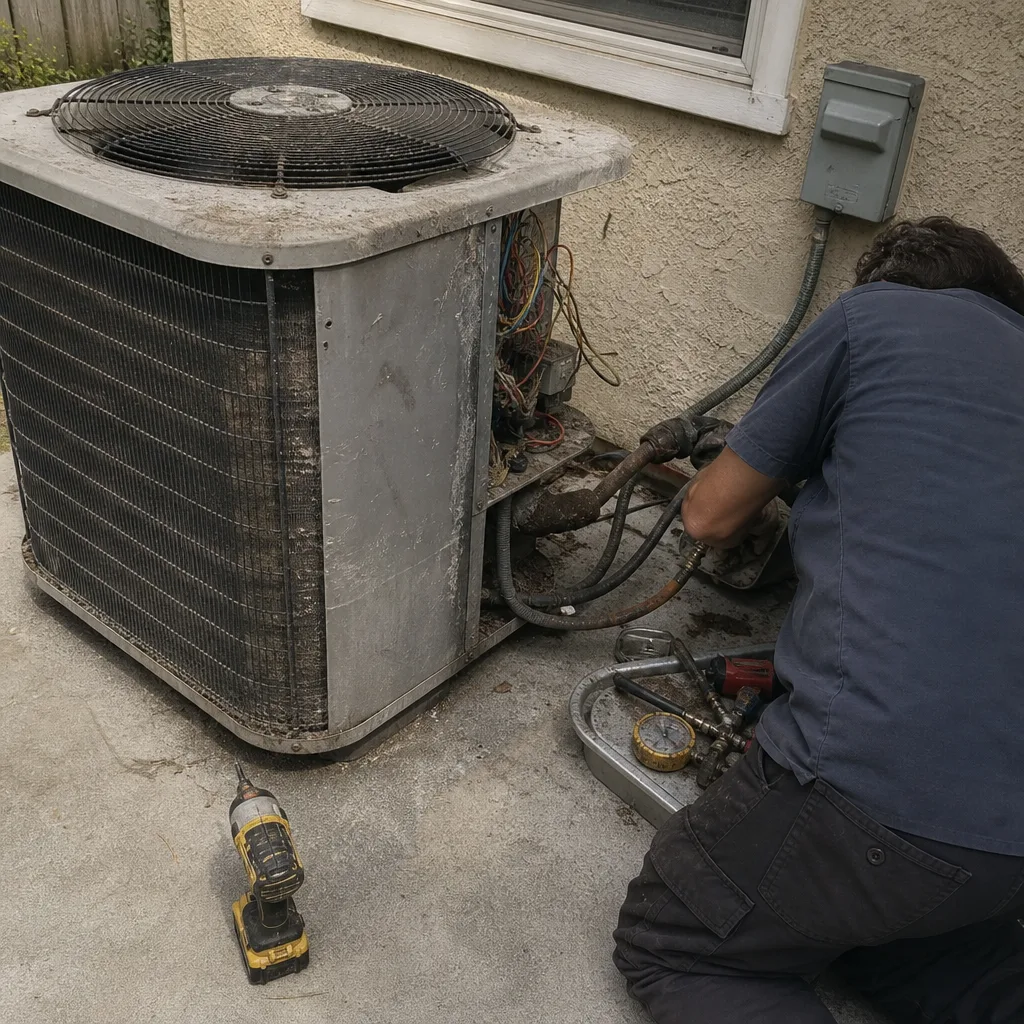
HVAC warning signs: Uneven temperature between rooms, especially rooms on the same floor, often indicates duct leakage or an improperly balanced system rather than an undersized unit. Short cycling, where the system turns on and off every few minutes, stresses the compressor and drives up energy bills while reducing equipment life. In Morgan Hill’s inland climate, where summer temperatures push into the high 90s, a short-cycling system is working against you every day. Dust accumulating unusually quickly on furniture weeks after cleaning often means the return air system is pulling air from an unconditioned space, like an attic or crawl space, through a breached duct.
These systems are not where you want to discover the warning signs have passed. A pinhole leak behind a kitchen cabinet wall can run for months before the drywall fails and the damage becomes obvious. A loose electrical connection inside a wall can overheat for years before an outlet fails or, worse, ignites. The early signs are there. They’re just easy to overlook.
Common Mistakes to Avoid
- Patching a crack before diagnosing it: If a crack is active, patching hides the evidence and gives the problem time to worsen unseen. Always determine whether movement is ongoing before you cover it. A $15 tube of caulk can obscure a $15,000 structural problem.
- Assuming all cracks are “normal settling”: Some settlement is normal in Morgan Hill. Progressive settlement is not. If you haven’t established a baseline, you can’t tell one from the other. Mark crack endpoints, photograph them, and revisit in six months.
- Ignoring smells: Musty, earthy, or sewer-like odors are diagnostic information. They don’t clear up on their own, and air fresheners don’t fix the source. In Morgan Hill’s dry climate, homeowners sometimes assume moisture problems can’t happen here. They can and do, usually in concealed spaces.
- Deferring roof maintenance until there’s a leak: By the time water enters the living space, the roof deck beneath the shingles has usually been wet for weeks or months. The leak is the late-stage warning, not the early one. Ground-level visual inspections catch most roof problems a full season before they breach the interior.
- Treating all rooms as equal when noticing humidity changes: A single room that feels clammy in summer while the rest of the house stays dry is telling you something specific about that room’s envelope or ductwork. It’s not a whole-house humidity problem. It’s a localized air or moisture infiltration problem.
- Assuming a new home means no problems: New construction in Morgan Hill is built better than most older homes, but installation defects happen. A crack in a 5-year-old home can represent a more meaningful structural issue than a similar crack in a 40-year-old home, precisely because age can’t explain it away.
- Waiting until multiple symptoms appear before calling anyone: Single symptoms have causes. Multiple symptoms have a shared cause. A door that sticks and a baseboard gap and a fresh crack all on the same wall line are one problem wearing three different disguises. Calling at symptom one is cheaper than calling at symptom three.
When to Call a Professional
You don’t need a contractor for every crack, and a guide like this should give you the confidence to make that call. Monitor hairline cracks that are stable. Note seasonal changes and track them over a year. But call a professional when you see stair-step cracking in stucco, a door that binds and has never released, active water staining on a ceiling, multiple electrical warning signs on the same circuit, or a roof showing granule loss and curling across more than a third of its surface. These are not symptoms to watch longer. They are symptoms to have evaluated now. Brookside Contractors offers free estimates in Morgan Hill, and if you’d like a full-scope property assessment that covers structural, roofing, and systems concerns under one visit, call (833) 725-3508.
See the difference
 Before
 After
 Before
 After
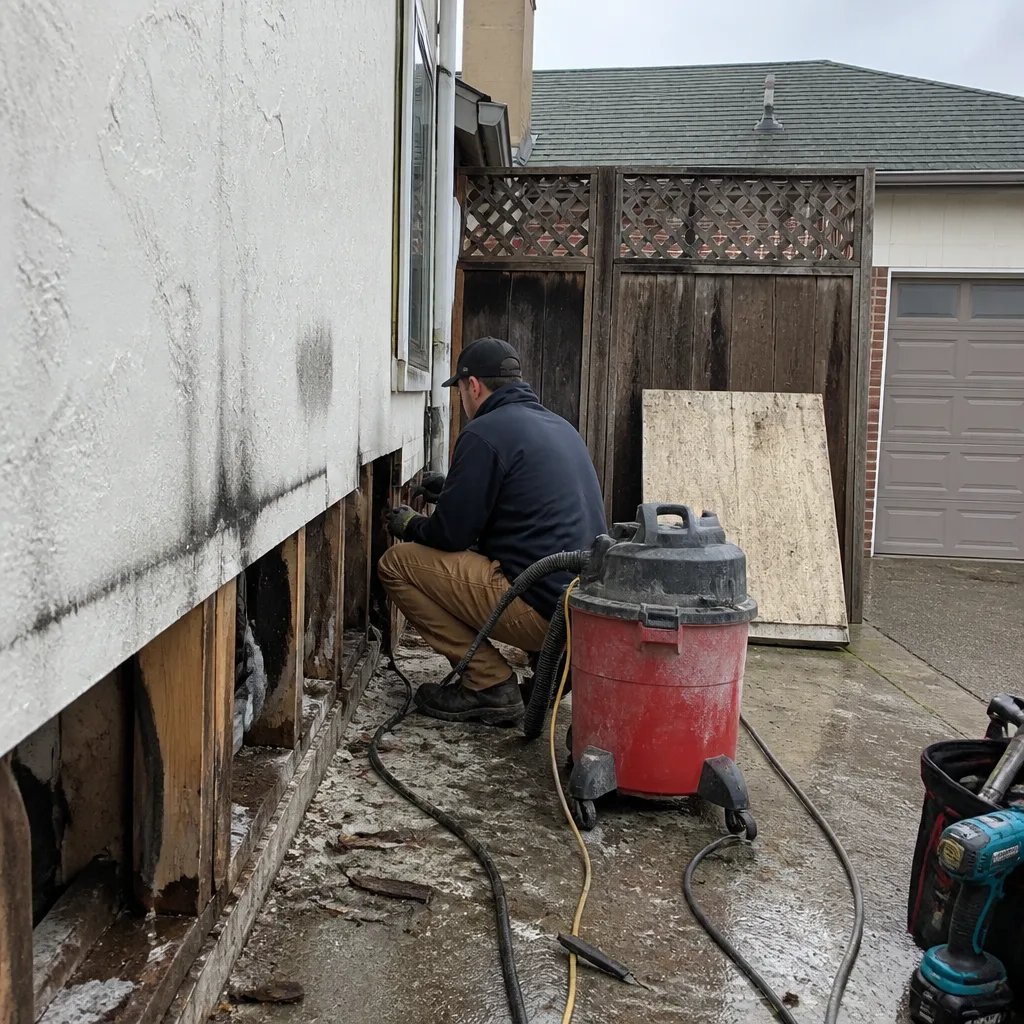 Before
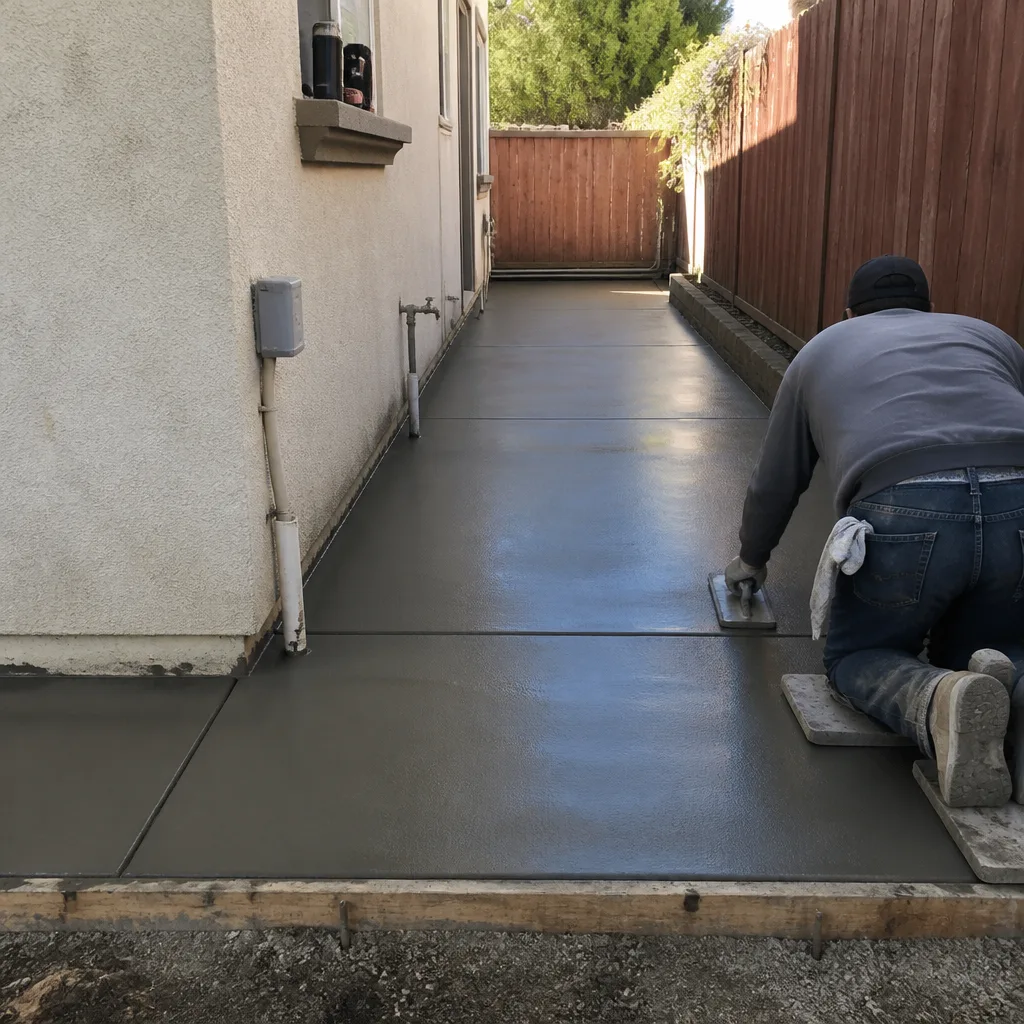 After
Frequently Asked Questions
Structural cracks typically follow a stair-step pattern along mortar joints, run diagonally from window or door corners, or are wider at one end than the other. Cosmetic cracks are generally hairline, run straight, and don’t change over time. The definitive test is monitoring: mark both ends, measure the width, and check again in six months. If it has widened or lengthened, it’s active and needs professional evaluation.
Foundation problems in Morgan Hill typically present as doors that bind and won’t unbind, stair-step stucco cracks on one side of the house, floors that slope noticeably, and gaps opening between walls and ceilings. Because local clay soils expand and contract with seasonal moisture, some movement is normal. The concern is movement that only goes one direction: that indicates settlement, not seasonal cycling.
Costs vary widely by cause. Simple crack repair with surface patching and repainting runs $400 to $800 a wall. A foundation underpinning project, needed when settlement is progressive and significant, can range from $25,000 to $60,000 depending on the number of piers required and access conditions. The price difference is exactly why diagnosing early matters. Call (833) 725-3508 for an exact quote on your specific situation.
Yes, and it’s an active concern throughout Morgan Hill. Clay soils expand when wet and shrink when dry, which cycles foundations through yearly movement. Over decades, this repeated movement can cause fatigue cracking in slabs, racking in wood framing, and shifting in perimeter foundations. Proper drainage, consistent soil moisture, and a well-designed foundation mitigate most of the risk. Homes with poor drainage and unbalanced watering patterns face the highest movement potential.
Hidden water damage presents as musty air with no visible source, bubbling or peeling paint, baseboard separation, door binding from wood swelling, elevated indoor humidity in one room, and unexplained spikes in water bills. In Morgan Hill’s dry climate, homeowners often dismiss these signs because they associate water damage with wet climates. Hidden leaks in walls and ceilings damage Morgan Hill homes the same way they damage Seattle homes: slowly and expensively.
Minor settling produces hairline cracks that run straight, typically at taped seams, and stabilize within the first few years after construction. Be concerned when drywall cracks run diagonally from door or window corners, when cracks reappear after patching, when they’re wider than a thumbnail’s edge, or when they’re paired with other symptoms like sticking doors or separating trim. Multiple symptoms on the same wall line tell you the frame is moving, not just the mud drying out.
The Bottom Line
Morgan Hill homes speak in patterns, and the homeowners who listen save themselves from the two most expensive outcomes in construction: undiagnosed structural movement and undetected moisture intrusion. The skill is interpretation. Hairline vs. structural. Seasonal vs. progressive. Age-appropriate vs. age-alarming. None of it requires panic, and most of it doesn’t even require immediate action. What it requires is attention: marking cracks, photographing symptoms, and getting a professional read when a pattern stops acting predictably. Our General Contractor Maintenance Checklist for Morgan Hill Homeowners can help you stay on top of it. The earlier you interpret a warning sign correctly, the smaller the repair. That’s the entire game.
If you’re seeing any of the warning signs in this guide and want a professional assessment of what they mean in your specific Morgan Hill home, call Brookside Contractors at (833) 725-3508 to schedule a free estimate. We work from foundation to finish across home renovation and construction projects, which means you get one coordinated perspective on your whole property, not one specialist’s view of one symptom. Learn more about our full scope of work at the Brookside Contractors home page.
Written by the team at Brookside Contractors, serving Morgan Hill since 2011.