
Last updated October 30, 2026
 Home additions & ADU
 Kitchen remodeling
 Bathroom remodeling
 Roofing
 Windows & doors
 Driveway & pavers
 Fence
Free written scope consultation - allowances, timeline, and change-order rules on paper before a single trade is scheduled
General Contractor Maintenance Checklist for Morgan Hill Homeowners
Here’s a number that should stick with you: in our experience walking Morgan Hill properties, roughly 60% of the five-figure repair jobs we quote could have been avoided entirely with a $200 annual maintenance routine. Most checklists hand you a seasonal chore list. This one works backward from the expensive failures we actually see, and the maintenance habits that prevent them. You’ll learn the exact walkthrough sequence a our General Contractor services team uses in Morgan Hill, which six spots reveal whether a home has been maintained or merely kept clean, and how to separate deferrable tasks from the ones that compound quietly into structural liability.
Styles & brands we work with
Quick Answer
A proper Morgan Hill home maintenance routine follows the same sequence a contractor uses: start at the roofline, move to drainage and exterior envelope, then inspect the crawlspace or foundation before finishing inside with moisture-source checks. The highest-leverage checks in Morgan Hill are sealant and caulk integrity around windows and penetrations (due to the area’s hot-day/cool-night thermal swings), gutter and downspout function before winter rains, and crawlspace ventilation and moisture inspection in older ranch-style homes. Done twice yearly at the right times, these checks cost under $200 total and prevent the majority of the major repair calls we see at Brookside Contractors home.
Table of Contents
- The Contractor’s Walkthrough Sequence: Why Order Matters
- Morgan Hill’s Thermal Swing Problem: What the Climate Does to Your Home
- Roof and Gutter Checks That Catch Problems Before They Cascade
- The Exterior Envelope: Caulk, Flashing, and Siding Inspections
- What a GC Looks for in Crawlspaces and Attics
- Plumbing and Moisture-Source Checks Inside the Home
- Which Maintenance to Defer and Which Cannot Wait
- The Four Most Expensive Preventable Repairs We See in Morgan Hill
- Common Mistakes to Avoid
- When to Call a Professional
- Frequently Asked Questions
- The Bottom Line
The Contractor’s Walkthrough Sequence: Why Order Matters
When a general contractor first walks a Morgan Hill property, we don’t start in the kitchen or the primary bathroom. We start at the top and work down, then go under. This isn’t habit. It’s because water and structural problems follow gravity and thermodynamics, and if you inspect in the wrong order, you’ll miss the cause and only find the symptom.
The sequence matters because each layer of a home protects the one below it. The roof protects the attic. The attic protects the ceilings. The exterior envelope protects the framing. The foundation protects everything above it. Skip a layer and you’ll misdiagnose the problem. A ceiling stain on the first floor of a two-story Morgan Hill home might look like a plumbing leak, but if the roof flashing failed above the second floor and water traveled down a wall cavity, you’ve got a roofing problem presenting as a plumbing problem.
- Roofline first. Shingles, flashing, vents, and anything that penetrates the roof surface. In Morgan Hill’s summer heat, roofing materials expand. At night, they contract. This thermal cycling is where most failures begin.
- Gutters and downspouts second. You need to see how water leaves the roof before you can assess whether it’s being managed properly.
- Exterior walls and openings third. Windows, doors, siding, and every penetration (hose bibs, vents, electrical boxes). This is the enclosure that keeps Morgan Hill’s dry summer heat and winter rain where they belong: outside.
- Foundation and crawlspace fourth. After you know how water behaves on the surface, you can look for signs of where it’s ending up underground.
- Interior moisture sources fifth. Plumbing, bathrooms, kitchens, laundry. By now you know whether a moisture problem is coming from inside or outside.
- Attic last. Going into the attic at the end lets you check the underside of the roof deck with fresh context: you’ve already seen the shingle conditions from above and the interior stains from below.
You can do this sequence yourself in about 90 minutes, twice a year. The timing in Morgan Hill matters more than most Bay Area locations because our temperature swings are more extreme than coastal communities. Do the first pass in late September or early October, before the winter rains arrive. Do the second in April or May, after the rainy season ends and before the summer heat accelerates material expansion and drying.
Morgan Hill’s Thermal Swing Problem: What the Climate Does to Your Home
Morgan Hill sits in a microclimate that’s meaningfully different from the rest of Santa Clara Valley. Summer days regularly hit the mid-90s to low 100s, while nights drop into the 50s. That’s a 40-degree swing in a single day, repeated dozens of times each summer. Coastal Bay Area homes experience maybe a 15-degree daily swing. This matters because every material in your home expands and contracts at a different rate than the material next to it.
Caulk is the most visible casualty. The sealant you see around your window frames, door casings, and exterior penetrations is designed to flex, but it has a finite lifespan. In Morgan Hill’s climate, that lifespan is shorter than what manufacturers print on the tube. A bead of high-quality exterior caulk rated for 20 years of service may show cracking, pulling, or full adhesion failure in 8 to 12 years here because the thermal cycling keeps working it until it tears itself loose from one of the two surfaces it bridges.
When caulk fails, water entry becomes a matter of time rather than probability. The failure usually shows up on the west-facing and south-facing sides of a home first, where the afternoon sun hits hardest. Those surfaces get the most thermal stress, so they degrade fastest. When we do a maintenance walkthrough in Morgan Hill, we spend the most time on the sun-exposed elevations for exactly this reason.
The same thermal cycling affects roof flashing, siding fasteners, and even drywall inside attic spaces. Anything that bridges two different materials (wood to stucco, metal flashing to shingles, vinyl window frame to hardie board) is a stress point where differential expansion eventually creates a gap. Your maintenance job is to find those gaps before the winter rains do.
Roof and Gutter Checks That Catch Problems Before They Cascade
Roof problems are the most expensive home maintenance failures we encounter in Morgan Hill, and the frustrating part is that most of them announce themselves months before they cause interior damage. The evidence is there. You just have to look.
Walk the perimeter of your home with binoculars or a camera with a zoom lens. You’re looking for cracked, curled, or missing shingles, but also for subtler signs. Shingles that look like they’re “lifting” at the edges suggest the adhesive strips have failed, which happens faster in Morgan Hill heat. Dark stains that run down the roof slope in vertical streaks often indicate algae growth, which isn’t structural but does trap moisture against the shingle surface. That trapped moisture accelerates granule loss, and granule loss is the beginning of shingle failure.
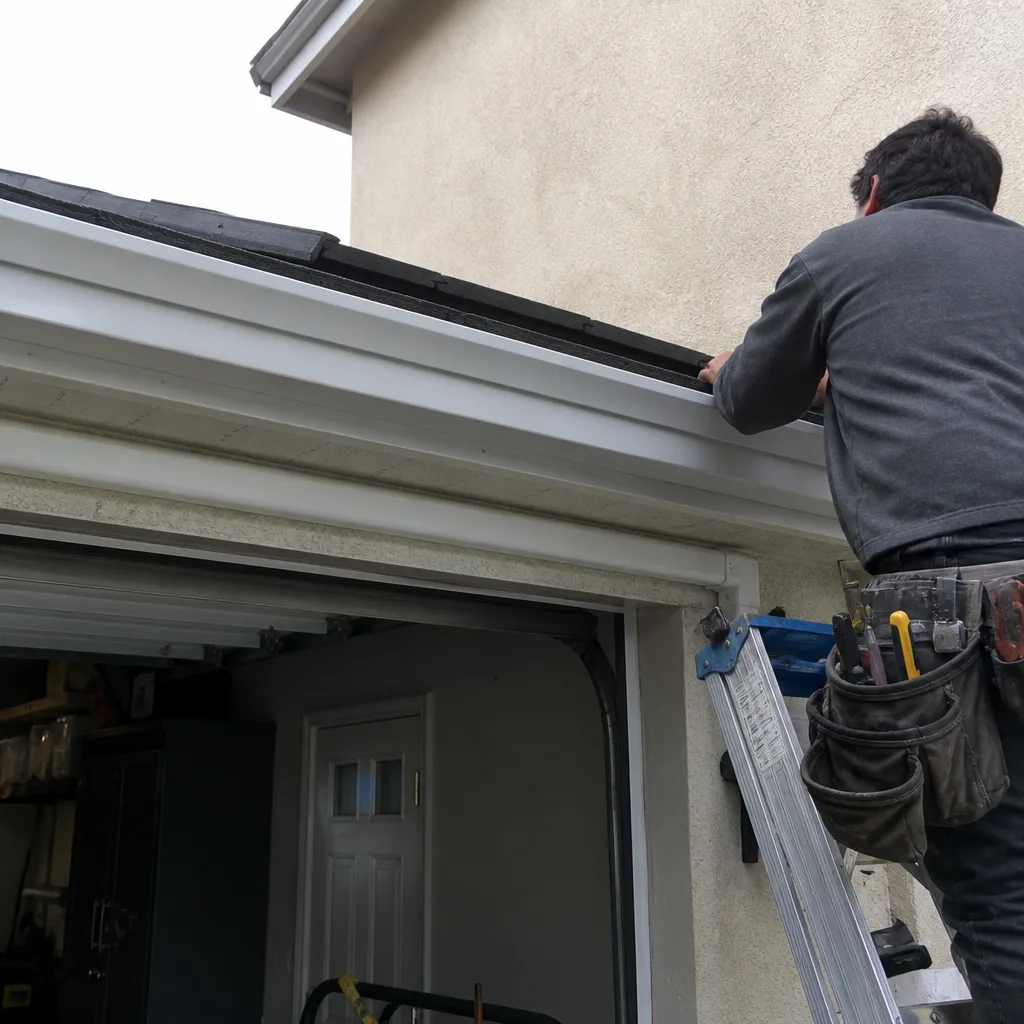
Flashing is where roofs actually leak. Shingles shed water, but flashing channels it. The flashing around chimneys, vents, skylights, and anywhere a roof plane changes direction is the highest-risk area on any roof. In Morgan Hill, the repeated expansion and contraction cycles break the sealant and fasteners holding flashing in place long before the shingles themselves fail. If you notice any lifting, cracking, or rust-colored staining around flashing, treat it as an immediate repair item.
Gutters are the second half of the roof equation, and in Morgan Hill they’re carrying a heavier debris load than most homeowners realize. The area’s mature oak trees (especially in the neighborhoods around Jackson Elementary and along the western foothills) drop an enormous amount of leaf litter and acorns each fall. A gutter that’s 50% clogged will overflow during the first heavy winter storm, and that overflow lands at the foundation line. That’s the direct path from gutter neglect to crawlspace moisture problems and foundation settlement.
- Check gutter seams and joints for the beginnings of rust or separation. These are the first failure points.
- Test downspouts by running a hose into the gutter and watching where the water exits. It should be carrying water at least 4 feet away from the foundation.
- Look for soil erosion or depressions directly below downspout exits. This indicates concentrated water flow that’s cutting into the soil and working toward your foundation.
- Trim back any tree branches that overhang the roof. This isn’t just about leaves in the gutter. Branches scraping shingles in the wind remove granules and accelerate roof aging.
The Exterior Envelope: Caulk, Flashing, and Siding Inspections
Once you’ve checked the roof and gutters, move down to the exterior walls. This is where Morgan Hill’s thermal cycling does its most visible damage, and it’s the area where a one-hour inspection can save you thousands in interior repairs.
Start with every opening and penetration. That means windows, doors, the dryer vent, the bathroom fan exhaust, hose bibs, electrical meter boxes, and anywhere a pipe or wire passes through the wall. Run your finger along the caulk beads at each of these points (or use a plastic tool if the surface is sharp). Good caulk should feel slightly flexible and remain firmly attached to both surfaces. If it’s cracked, pulling away, or feels rigid and chalky, it’s failed or on its way to failing. Mark those locations and plan to recaulk them. The materials cost under $20 for a tube of high-quality exterior sealant. The interior water damage from a failed bead is measured in thousands.
Window and door flashing is less visible than surface caulk but more important. The flashing sits behind the exterior trim, so you can’t see it directly. What you can see are the results of flashing failure: water stains on interior drywall around the top corners of windows, peeling exterior paint directly below the window, or wood rot in the windowsill itself. In Morgan Hill, we see this pattern most often in homes built in the 1970s through 1990s ranch-style construction, where flashing details were often minimal or compromised by later window retrofits.
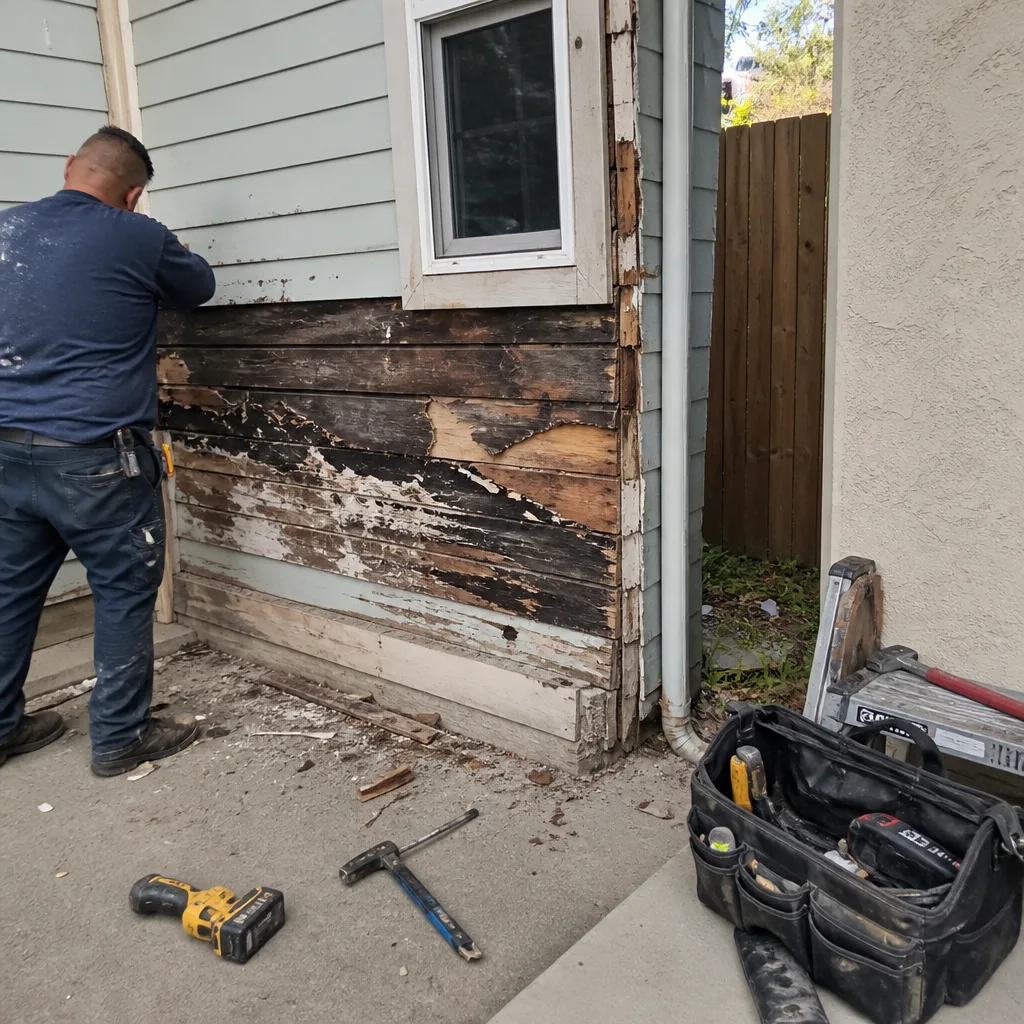
Siding inspection depends on the material. For stucco, you’re looking for hairline cracks (which are normal and manageable) versus cracks wide enough to fit a credit card edge (which are not). For wood siding, check for soft spots that indicate rot, especially near the bottom edge where splash-back keeps the material wet. For James Hardie and other fiber cement products, you’re checking for proper gap maintenance at joints and around windows. These gaps exist for a reason: they allow the material to expand and contract without pressing against itself and buckling.
If you’re considering siding replacement or need a professional assessment of what you’re seeing, our team does this kind of walkthrough in Morgan Hill regularly. The same goes for window replacement decisions: knowing which failures are repairable versus which mean replacing the unit is the difference between a $50 fix and a $5,000 one. For detailed guidance on larger exterior projects, see our General Contractor in Los Gatos page for a look at how we approach exterior scopes.
What a GC Looks for in Crawlspaces and Attics
Here’s the truth: most Morgan Hill homeowners haven’t been in their crawlspace since the day they bought the house. We get it. It’s dark, cramped, and unpleasant. But the crawlspace is where moisture problems, structural issues, and pest damage reveal themselves years before they become visible in the living space. A 20-minute inspection twice a year is the highest-value maintenance time you can spend in terms of dollars prevented.
Morgan Hill’s older housing stock includes a high proportion of ranch-style homes built between the 1950s and 1980s. Many of these were constructed with original crawlspace ventilation designs that are inadequate by modern standards. The building science has changed significantly: we now understand that crawlspaces need either active ventilation or full encapsulation, not just a few passive foundation vents. A crawlspace with insufficient ventilation traps humidity against floor joists, and that’s where wood rot begins.
When you’re under the house (wear long sleeves, knee pads, and a headlamp; bring a moisture meter if you have one), here’s what you’re looking for:
- Standing water or damp soil. Any moisture visible on the surface suggests drainage problems or a plumbing leak. This is never normal.
- Condensation on pipes or insulation. This indicates the humidity level is too high and the ventilation is failing.
- Wood staining or discoloration on floor joists. Dark staining can be cosmetic. Soft spots, fungal growth, or wood that flakes when scratched are structural problems.
- Evidence of termites or other pests. Morgan Hill’s warm climate is termite-friendly. Look for mud tubes on foundation walls, piles of discarded wings, or wood that sounds hollow when tapped.
- Insulation that’s hanging down or missing. Insulation that has fallen is worse than no insulation in that spot: it leaves the floor above unprotected while creating a moisture trap in the fallen material.
The attic is the mirror image of the crawlspace. You’re looking at the underside of the roof deck for water staining (which tells you a leak exists or existed), dark streaks that indicate past moisture (even if it’s currently dry), and you’re checking the ventilation. Morgan Hill’s hot summers turn an under-ventilated attic into an oven. Attic temperatures above 140 degrees will bake your shingles from below, dramatically shortening their lifespan and increasing your cooling bills. Proper attic ventilation means intake vents at the eaves and exhaust vents near the ridge, working together to create a continuous air flow.
Plumbing and Moisture-Source Checks Inside the Home
Once you’ve established that water is being managed properly from the outside, turn your attention to the water sources inside the home. This is where maintenance intersects with the areas homeowners actually live in, and where problems tend to be noticed faster. But “noticed” and “addressed” are different things.
Start under every sink and behind every toilet. Moisten a paper towel and press it against the shut-off valves. If the towel picks up moisture, the valve is weeping. This is a $15 replacement part that, left alone, becomes a slow drip that eventually rots the cabinet floor and the subfloor below it. Check the supply lines themselves for any cracking or bulging. Rubber and braided supply lines have a service life, and when they fail, they fail catastrophically. A burst supply line in a second-floor bathroom can do $20,000 in damage while you’re at work.
Water heaters in Morgan Hill deserve special attention because the local water has high mineral content. Sediment builds up in the tank bottom over time, reducing efficiency and accelerating corrosion. If you haven’t flushed your water heater in three years, it’s due. If you hear popping or rumbling sounds when the heater runs, that’s sediment. It indicates the tank is working harder than it should, and it’s the first warning sign of eventual tank failure. Most tank water heaters last 8 to 12 years in Morgan Hill conditions. If yours is older than that and you’re hearing sounds, plan for replacement on your schedule rather than waiting for the emergency.
Bathroom and kitchen fixtures are also where material choices matter. We work extensively with Kohler, Moen, Delta, and Blanco fixtures across our remodeling projects, and the difference between a quality fixture and a budget one shows up in exactly these maintenance moments. Higher-grade valves and ceramic disc cartridges fail less often and in more predictable ways. A Moen or Kohler cartridge replacement is a straightforward fix if you know your fixture model. A no-name fixture from a builder’s special can be impossible to source parts for, which means replacing the entire assembly when a 50-cent washer fails. Knowing what’s in your home matters when maintenance time comes.
Finally, check your bathroom exhaust fans. Run a piece of tissue paper up to the running fan. If the fan holds the tissue in place, extraction is working. If the tissue drops, the fan is either clogged or venting into the attic rather than outside. In Morgan Hill’s winter months, an ineffective bathroom exhaust fan pushes moist air into the attic or the wall cavity, where it condenses against cold surfaces. That condensation is the slow-motion version of a plumbing leak: it takes longer to cause damage, but it’s doing the same thing.
Which Maintenance to Defer and Which Cannot Wait
Every homeowner has a list of things they know they should do but haven’t gotten to. The skill is knowing which deferrals are safe and which are quietly compounding into bigger problems. Here’s the decision framework we use when we walk a Morgan Hill property and advise homeowners on priorities, and you can find General Contractor Troubleshooting: Common Problems and How to Fix Them for deeper guidance.
The test comes down to a single question: Does this problem get more expensive the longer I wait? If the answer is yes, it’s not deferrable. It’s a priority. If the answer is no, you can schedule it when budget and time allow.
Problems that COMPOUND (address immediately)
- Any water intrusion. Whether it’s a roof leak, a failed caulk bead, a weeping valve, or a crawlspace with damp soil. Water problems grow. The rot spreads. The mold establishes. The fix gets more expensive every month.
- Flashing or sealant failure. These protect the structure behind them. Every gap is an open door for the next rain.
- Gutter or drainage failure. Water that isn’t moved away from the foundation is actively working against the foundation. In Morgan Hill’s clay-heavy soils, this is especially problematic because the soil expands when wet and contracts when dry, putting cyclic pressure on foundations.
- Any structural issue. Cracks in foundation walls wider than a hairline, soft spots in floors, doors that suddenly stop latching. These indicate movement or deterioration that won’t self-correct.
- Active pest problems. Termites don’t take breaks. They’re eating your framing right now. Every week of delay is measurable structural loss.
Problems that can WAIT (schedule within 6-12 months)
- Cosmetic interior updates. Paint, flooring, outdated fixtures. These don’t get more expensive to fix if you wait (though material costs may rise with inflation).
- Granular roof wear without leaks. Shingles losing granules but still shedding water properly can wait. Monitor them, but don’t rush a $15,000 re-roof for cosmetic reasons.
- Fence and hardscape maintenance. A wobbly fence post or a slightly settled paver is annoying but not compounding. It’ll be the same fix next spring.
- Appliance upgrades. A dishwasher that works but is loud is a preference issue, not a maintenance issue. Run it until it fails, then decide.
The distinction matters because money is finite. Spending $500 on the urgent caulk and flashing repairs while deferring the cosmetic updates is a better allocation than splitting your budget evenly across everything. When we do remodel planning with Morgan Hill homeowners, this is the same prioritization logic we apply to larger scopes. For a deeper look at how this sequencing works in practice on full renovation projects, our Home Remodeling in Los Gatos page walks through a similar framework.
The Four Most Expensive Preventable Repairs We See in Morgan Hill
These are the calls we get where, after the quote is prepared and delivered, the homeowner asks some version of: “how could this have been avoided?” The answer is usually the same: a $50 to $200 maintenance item that was deferred for two or three years. Here’s what we see most often, starting with the most expensive.
1. Crawlspace Rot Repair: $8,000 to $25,000
The typical scenario: a Morgan Hill ranch home with original 1960s ventilation, a downspout that’s been discharging water at the foundation line for years, and floor joists that have been absorbing that moisture the whole time. By the time the homeowner feels a soft spot in the hallway floor, several joists need sistering or full replacement, and the subfloor above them is compromised. The preventive version of this is a free gutter check and a $30 downspout extension, done annually.
2. Window and Wall Water Damage from Failed Caulk: $4,000 to $12,000
Caulk fails around a window frame. Winter rain gets in. The water travels into the wall cavity and down into the sill framing. By the time it’s visible on the interior drywall, you’re not re-caulking. You’re removing drywall, replacing the sill plate, possibly replacing insulation, and doing mold remediation. The preventive version is a $25 tube of sealant and two hours of work on a Saturday afternoon.
3. Roof Leak with Ceiling and Insulation Damage: $5,000 to $15,000
Flashing sealant cracks at a roof penetration. Rain enters slowly during storms over two or three winter seasons. The leak isn’t dramatic enough to notice because the water is being absorbed by the attic insulation before it reaches the ceiling. By the time staining appears in the living room, the insulation above is saturated and ruined, and the roof deck underlayment is damaged. The preventive version is a roof inspection every fall, specifically checking every flashing point. The inspection is free from most contractors.
4. Water Heater Failure with Floor Damage: $3,000 to $8,000
A water heater reaches the end of its service life and fails without warning, usually at 2am. The tank splits at the seam, and 40 gallons of water find the path of least resistance through the floor. In a garage with a proper earthquake strap and a drain pan connected to a working drain, this is a manageable inconvenience. In a hallway closet with no pan and no floor drain? It’s a remediation project. The preventive version is paying attention to the water heater’s age, sounds, and any signs of sweating or weeping at the fittings, then replacing it on a schedule rather than waiting for the failure.
Common Mistakes to Avoid
- Cleaning gutters only when they’re visibly overflowing. By the time a gutter overflows, water has already been pooling at the foundation line. The scheduled cleaning, twice a year in Morgan Hill (once after oak leaf drop, once in spring), is what prevents the problem, not the reaction to visible failure.
- Ignoring hairline cracks in stucco and concrete. Morgan Hill’s soil movement and thermal cycling mean cracks form and grow. A hairline crack this spring is a water entry point next winter. Fill them early.
- Treating all caulk the same. Interior caulk and exterior sealant are different materials with different properties. Using the wrong one means you’ll be redoing it within a season.
- Deferring downspout repair because “it’s just a few feet.” A downspout that’s discharging water at the foundation line is doing exactly what the roof is designed to prevent: putting thousands of gallons of water against your foundation every winter.
- Skipping the crawlspace because it’s unpleasant. It’s unpleasant. It’s also where your structural failures brew in the dark. Twenty minutes twice a year is the cheapest structural insurance you’ll ever buy.
- Replacing rather than repairing out of fear. Contractors see this constantly: a homeowner is told by one company that a problem requires full replacement when it actually needs a $200 repair. Before authorizing a five-figure job, get a second opinion. The honest contractors in Morgan Hill will tell you what’s repairable.
- Doing nothing because the problem hasn’t caused visible damage yet. This is the mistake behind all four of the expensive repairs above. The absence of visible damage isn’t evidence of health. It usually means the damage is happening where you can’t see it.
When to Call a Professional
Many of the checks in this guide are DIY-able. But there are moments where the right move is to call someone who does this for a living. If you see water staining on interior ceilings or walls and can’t trace the source with confidence. If you find evidence of termites or other wood-destroying pests. If you’re seeing cracks in foundations or exterior walls that are widening, especially during seasonal transitions. If your crawlspace has standing water or the musty smell is strong enough to notice from the living space. And if you’re planning a larger renovation project (a kitchen, a bathroom, a full home renovation in Morgan Hill), having a contractor inspect the structure before you invest in finishes is the difference between a smooth project and one with expensive surprises. Brookside Contractors offers free estimates in Morgan Hill. Call (833) 725-3508 and we’ll walk your property with you, point by point, through this checklist.
Frequently Asked Questions
Twice a year. Once in late September or early October before the winter rainy season begins, and once in late April or early May as the weather transitions from wet to dry and hot. The two checks serve different purposes: fall is about preparing for water, spring is about assessing what the winter did and preparing for heat.
Many general contractors, including Brookside Contractors, offer free maintenance walkthroughs and estimates as part of their service. This isn’t a minor perk: a proper walkthrough with a contractor who knows what to look for gives you the same value as a paid home inspection but with the added benefit of an honest conversation about what’s urgent and what can wait. For related reading, see How to Hire a Construction Contractor in Morgan Hill: A Step-by-Step Guide. For specific scopes that require diagnostic equipment (thermal imaging, moisture metering in walls, sewer camera inspections), expect to pay $200 to $500 depending on the depth of the assessment.
Crawlspace moisture problems. The combination of older ventilation designs, clay-heavy soils that hold water against foundations, and oak leaf loads in gutters creates a perfect environment for moisture accumulation under the house. In our experience walking Morgan Hill homes, roughly half of the ranch-style properties we inspect have at least early-stage moisture issues in the crawlspace that haven’t yet become visible in the living space.
Yes, for surface-level caulk. The key is using the right product (exterior-grade sealant rated for the materials you’re working with), doing it during dry weather with temperatures between 50 and 80 degrees, and properly removing all of the old material before applying new. If the failure is in the flashing behind the window trim rather than the surface caulk, that requires removing trim and reinstalling it properly. That’s a contractor job. But the surface maintenance, done correctly, extends the life of the flashing behind it significantly.
On a hot summer afternoon, your attic should feel hot but not stifling, and you should feel some air movement. If the temperature in the attic is dramatically hotter than the outside air (more than 20 degrees difference), or if you don’t feel any air movement at all, your ventilation is insufficient. A simple check: on a cool morning, look up at the underside of your roof deck. If you see the nails glistening with condensation, that’s moisture being trapped without adequate ventilation to carry it out.
Spend it on water management. Caulk replacement at the most sun-exposed windows in your home ($50-100 in materials). Downspout extensions and gutter repairs wherever water isn’t being carried 4 feet from the foundation ($100-200). A roof inspection, prioritizing flashing condition at every penetration ($free if done as part of a contractor estimate). Any remaining budget goes to exterior sealant at other penetrations. Water is the enemy. Everything else is secondary.
The Bottom Line
Morgan Hill homes face a specific set of stressors: extreme thermal cycling, clay-heavy soils, oak leaf loads in gutters, and an older housing stock with designs that predate modern building science. The maintenance routine that protects homes here is simple but specific. Work from the top down. Check your roofline and flashing before winter. Keep gutters flowing and downspouts pushing water away from the foundation. Spend time in the crawlspace and attic, because that’s where problems brew before they show up in your living room. And use the defer-vs-act framework: if a problem compounds, it’s not deferrable. Most of the expensive repair calls we respond to in Morgan Hill were preventable with a small, regular investment of time and money. The checklist above is how you make sure you’re not the next one. For more guides & resources, visit our blog.
If you’d like a professional second set of eyes on any of the items in this guide, or if you’ve spotted something that concerns you, call (833) 725-3508 to schedule a free estimate. We’ll walk your property with you using this exact sequence, and we’ll tell you honestly what’s urgent, what can wait, and what it should cost.
Written by the team at Brookside Contractors, serving Morgan Hill since 2011.
See the difference
 Before
 After
 Before
 After
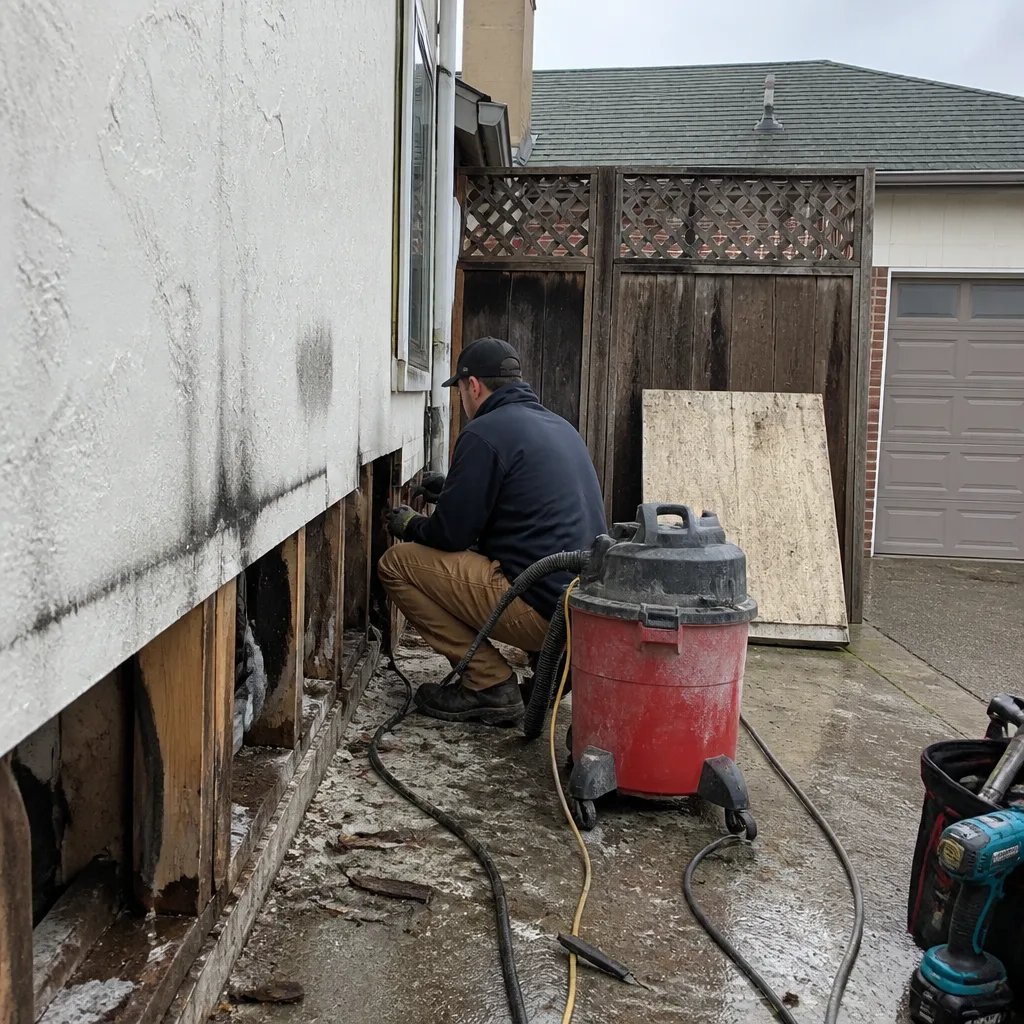 Before
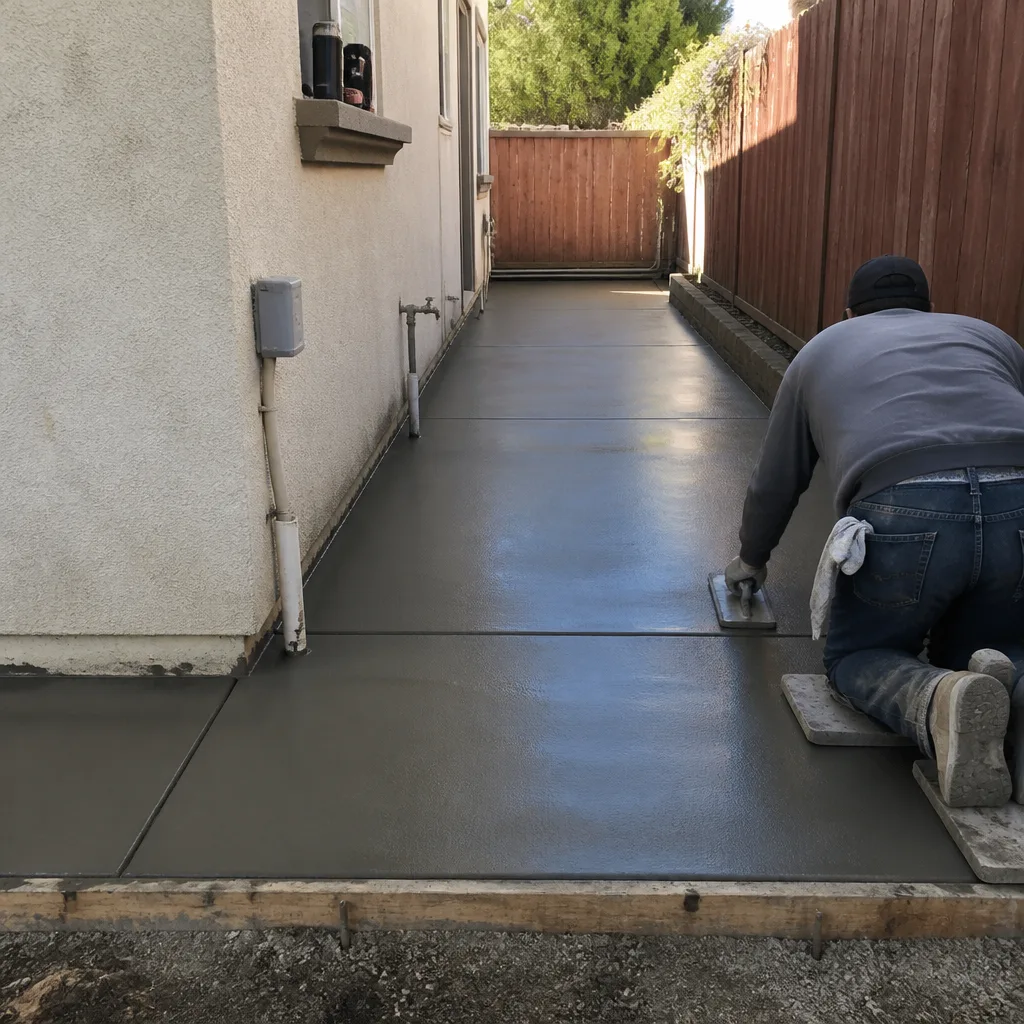 After