
Last updated October 30, 2026
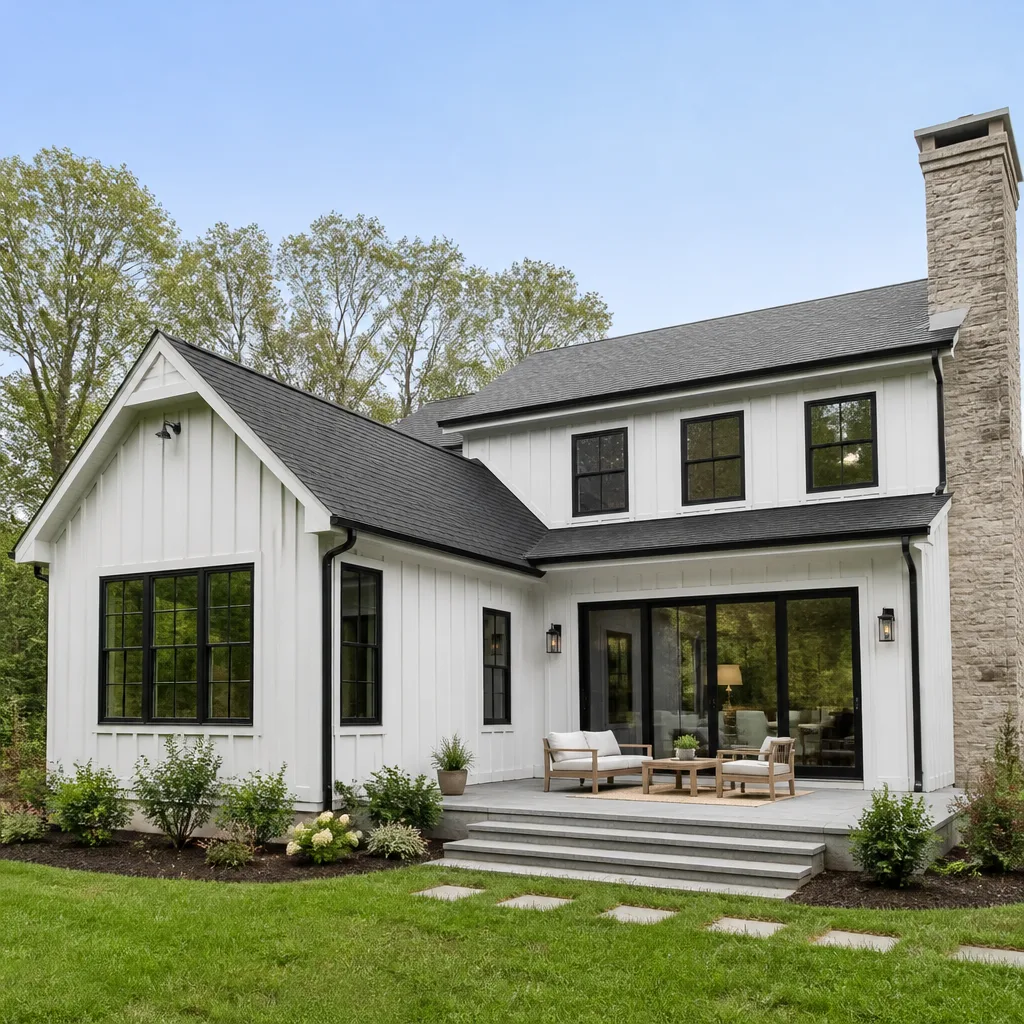 Home additions & ADU
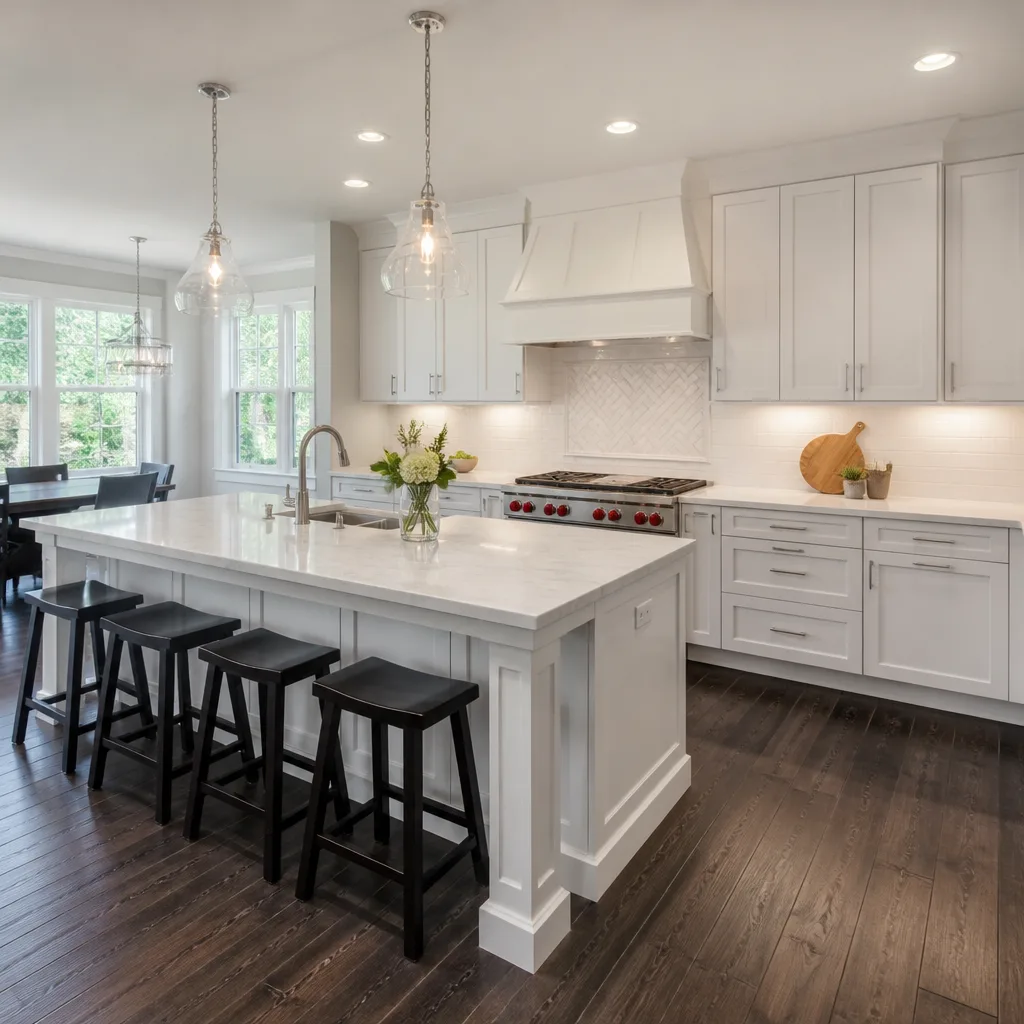 Kitchen remodeling
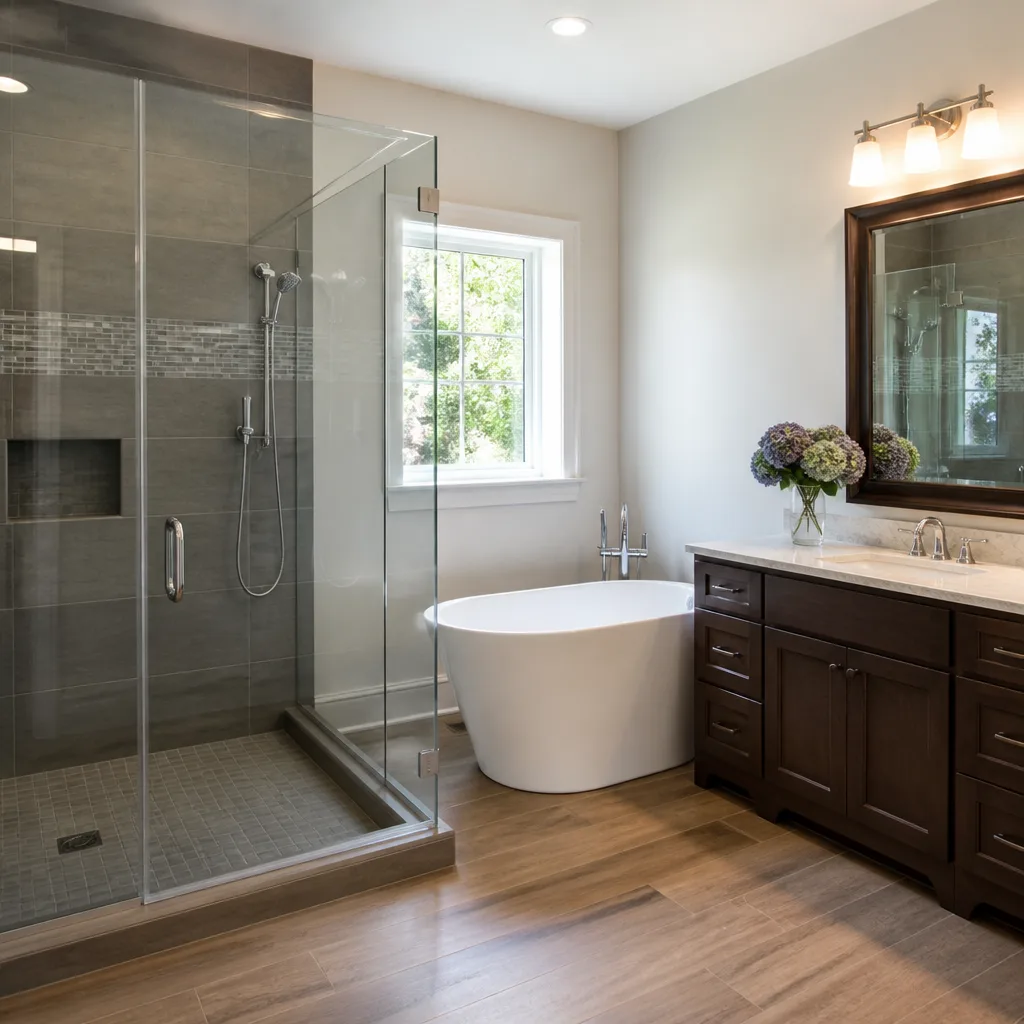 Bathroom remodeling
 Roofing
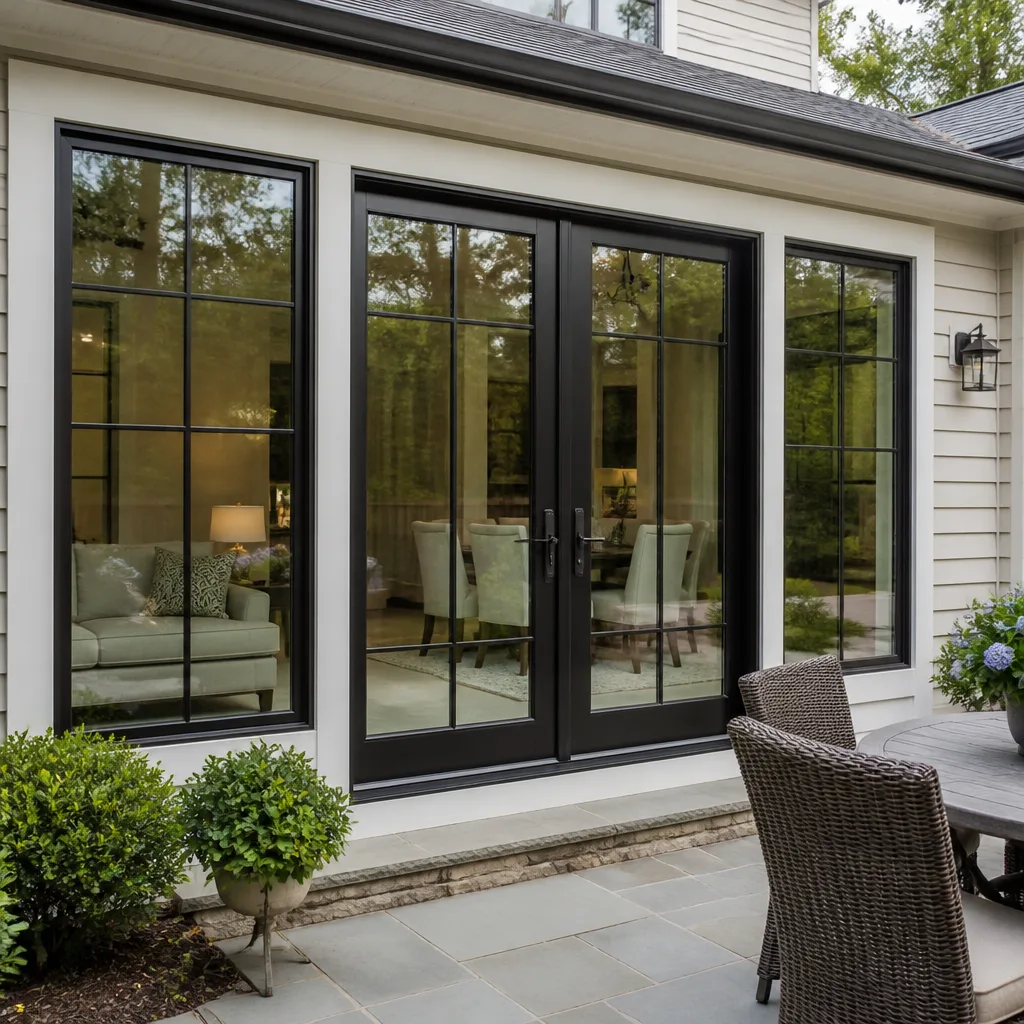 Windows & doors
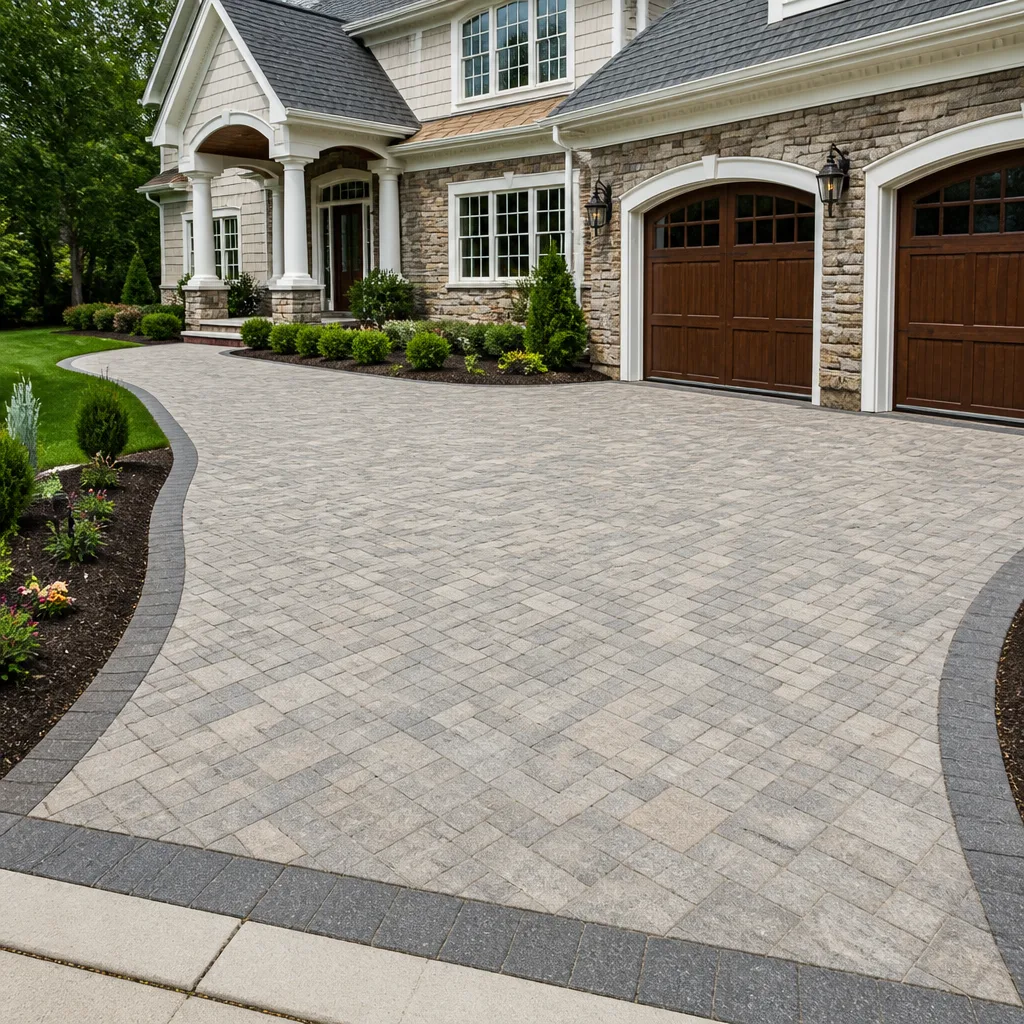 Driveway & pavers
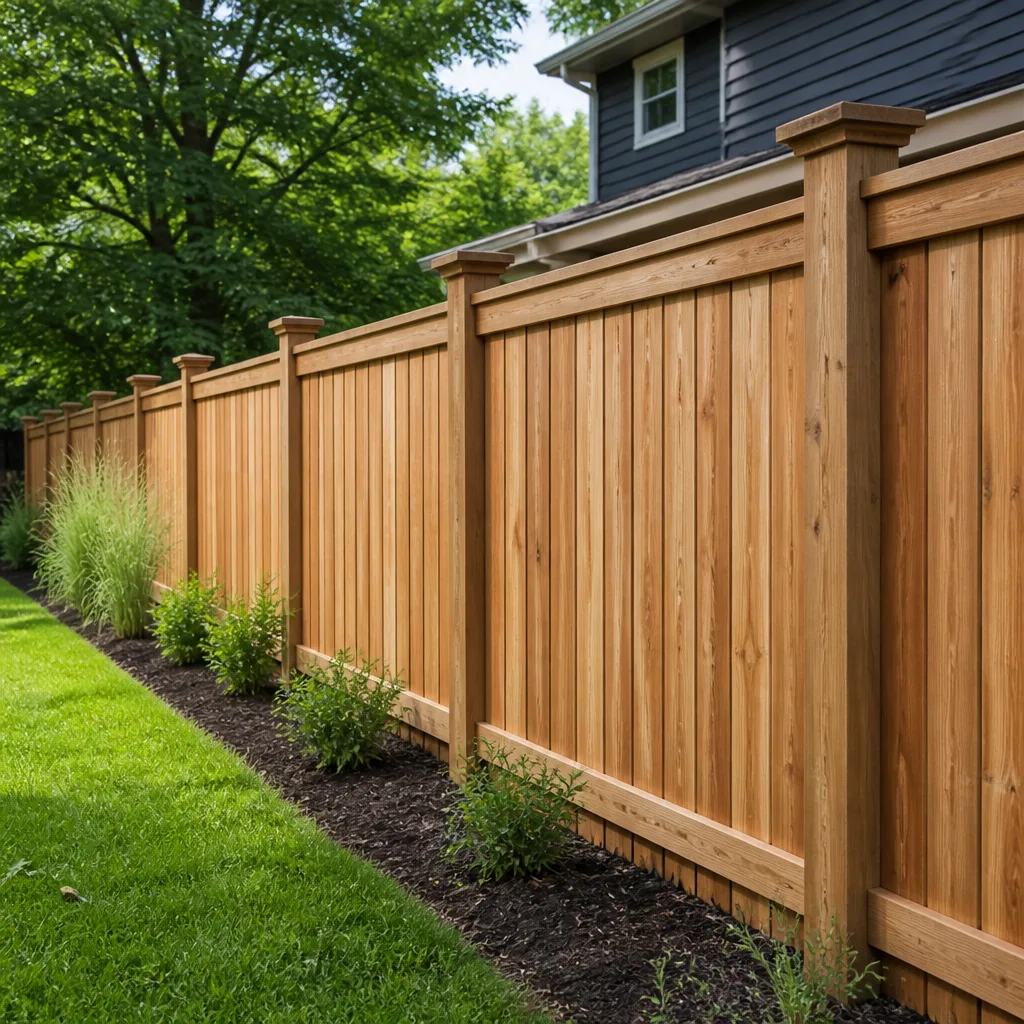 Fence
Free written scope consultation - allowances, timeline, and change-order rules on paper before a single trade is scheduled
Construction Cost Breakdown: The Morgan Hill Homeowner’s Reference for 2026
Two Morgan Hill homeowners can request bids for what they describe as the “same” 200-square-foot bathroom remodel and receive numbers that differ by $22,000. Both contractors can be entirely honest. Neither is padding the bill. The spread comes from assumptions buried in the proposal: one priced a fiberglass shower surround with a stock vanity, the other a curbless tiled shower with a custom double vanity and a heated floor. Neither homeowner asked the same questions, so neither got the same project. This guide exists to change that. You’ll learn how Morgan Hill construction costs actually break down, what drives the line items, and how to compare bids as a knowledgeable buyer rather than someone sorting numbers in a spreadsheet. By the end, you’ll understand cost structure, which matters far more than any national average. That skill will save you more money than any cost-per-square-foot chart ever will.
Quick Answer
Construction costs in Morgan Hill, CA in 2026 typically run $250 to $450 per square foot for interior remodeling, $180 to $320 per square foot for additions, and $350 to $550 per square foot for ADUs, depending on finish level and site conditions. The single largest cost drivers are labor rates in Santa Clara County, which run 18-25% above the national average, and the scope assumptions in your contract. A homeowner who understands line-item cost structure will routinely save 10-20% on the same project versus one who shops by total price alone.
Styles & brands we work with
Table of Contents
- The Line-Item Breakdown: Where Morgan Hill Project Money Actually Goes
- Morgan Hill Permit Fees and What They Add to Your Total
- Santa Clara County Labor Market Rates: Why Local Labor Costs What It Does
- Material Lead Times That Don’t Appear in National Estimates
- Site Conditions: How Morgan Hill Soil, Slope, and Access Change Your Bid
- What Drives Cost Variance Between Similar Bids
- Phased Projects vs. All-At-Once: When Sequencing Saves and When It Costs
- Common Mistakes to Avoid
- When to Call a Professional
- Frequently Asked Questions
The Line-Item Breakdown: Where Morgan Hill Project Money Actually Goes
Every residential construction project, whether it’s a kitchen remodel in the Jackson Oaks hills or a bathroom renovation near downtown Morgan Hill, follows the same cost anatomy. National averages blur this. A “typical kitchen remodel” figure tells you nothing about whether your quote includes demolition, whether the electrician’s panel upgrade is in the scope, or whether the allowance for tile will actually cover what you picked at the showroom. Here’s what a representative Morgan Hill project looks like when you split it into the categories that actually appear on a bid.
Representative Kitchen Remodel: 180 Square Feet, Mid-Tier Finish
- Demolition and disposal: 4-6% of total. In Morgan Hill, dump fees at the Gilroy transfer station and the time to haul debris from hillside neighborhoods add up faster than homeowners expect.
- Rough plumbing and electrical: 12-18% of total. This includes moving supply lines, adding circuits, and bringing the room to current code. Morgan Hill requires AFCI protection on new circuits, which adds $45-$70 per breaker compared to standard ones.
- Cabinetry: 20-28% of total. The single largest finish line item. A stock line like KraftMaid lands at the lower end; Wellborn semi-custom pushes the number up meaningfully. What matters is that this number is usually presented as an allowance, not a firm price.
- Countertops: 6-10% of total. Caesarstone or Cambria quartz runs higher than mid-tier options, but all of them are priced per slab, and slab yield determines your final number more than the per-square-foot price does.
- Flooring and tile: 5-8% of total. Tile labor in Santa Clara County is expensive because the installers are in high demand, not because the tile itself costs more.
- Fixtures and hardware: 4-6% of total. Kohler and Toto fixtures are excellent, but the install cost is roughly the same whether you choose a $200 faucet or an $800 one. That is where your budget flexibility lives.
- Painting and finish work: 5-7% of total. Always more than you expect because paint labor is priced by the hour, and detail work on custom millwork is slow.
- General contractor overhead and profit: 15-20% of total. This is not padding. It covers supervision, scheduling, warranty, and the risk that something goes sideways on a 12-week project.
The takeaway here is not the specific percentages. It’s the recognition that no line item exists in isolation. A contractor who proposes a lower cabinetry number may be assuming stock boxes with a shallower depth. A bid with a suspiciously low electrical number may not include the panel upgrade you’ll discover is mandatory halfway through. Our team at Brookside Contractors home walks every Morgan Hill client through a line-item estimate before work starts, precisely so those buried assumptions surface early.
Representative Bathroom Remodel: 60 Square Feet, Mid-Tier Finish
- Demolition: 5-7% of total.
- Plumbing rough-in: 15-20% of total. Bathrooms carry the most plumbing density per square foot of any room in the house, and moving a drain line in a slab-on-grade Morgan Hill home means cutting concrete, which is a different cost universe from a crawlspace home.
- Waterproofing and tile: 12-16% of total. If your bid includes a tiled shower with a mortar bed and a waterproof membrane, you are paying for labor measured in days, not hours.
- Vanity and countertop: 10-14% of total. Same allowance logic applies as kitchens.
- Fixtures, glass, and finish: 8-12% of total. Shower glass is one of the most commonly underestimated line items. Custom frameless glass for a 60-inch opening runs $1,800-$2,800 in Morgan Hill before installation.
- Electrical and lighting: 5-7% of total. Exhaust fan upgrades and GFCI requirements add small but real costs.
- GC overhead and profit: 15-20% of total.
Representative Home Addition: 400 Square Feet, Ground-Up
- Plans and engineering: 6-9% of total. Morgan Hill requires full construction drawings and structural calculations for any addition. Hillside lots may trigger geology and soils reports that flat-lot homes do not need.
- Site work and foundation: 18-25% of total. This is the line item that surprises people most. Morgan Hill’s expansive soils and, on many hillside properties, significant grading requirements make foundation costs far higher than national reference points.
- Framing and structural: 15-20% of total. Lumber prices have stabilized from their 2021-2022 spike, but engineered lumber and hold-down hardware for seismic code add another layer of cost.
- Rough mechanicals (plumbing, HVAC, electrical): 15-18% of total.
- Roofing, windows, and doors: 10-14% of total. James Hardie siding and PGT or Therma-Tru windows are common Morgan Hill choices, and each brand tier moves this line item by thousands.
- Finishes (drywall, flooring, paint, trim): 12-16% of total.
- GC overhead and profit: 15-20% of total.
These proportions are not a secret. Every experienced contractor in Morgan Hill works from the same cost structure. The difference is whether they show it to you. If a bid arrives as a single number with no breakdown, that is your first red flag.
Morgan Hill Permit Fees and What They Add to Your Total
Construction Permits, Codes & Inspections in CA: What You Need to Know starts with the basics: permit fees in Morgan Hill are calculated based on the project valuation, which is the total cost of labor and materials you declare on the application. The city’s fee schedule uses a sliding scale: smaller projects pay a few hundred dollars, while a $100,000 addition might carry building permit fees in the $1,800 to $2,500 range before you add plan check fees, which run approximately 65% of the permit fee, plus separate fees for electrical, plumbing, and mechanical work. A full kitchen remodel with structural changes, a bath remodel, and an electrical panel upgrade can accumulate $3,000 to $6,000 in total permit and inspection costs in Morgan Hill by the time the final inspection passes.
Here is what homeowners often miss: the permit fee itself is small compared to the cost of building to the code the permit enforces. Morgan Hill has adopted the current California Building Standards Code, which includes seismic requirements that are stricter than what a national framing guide assumes. Brace walls, shear panels, and hold-down hardware are mandatory on structural work. A deck or addition on a hillside lot with a slope over 10 percent triggers additional engineering requirements and potentially a soils report. These are not optional upgrades. They are conditions of getting the permit signed off, and they belong in your original scope, not in a change order after the inspector’s first visit. For a deeper look at what to watch for, see our Construction Warning Signs: A Morgan Hill Homeowner’s Reference Guide.
- Building permit: Required for structural changes, additions, decks over 30 inches high, and most interior remodels that move walls or alter load paths.
- Electrical permit: Required when adding circuits, upgrading panels, or moving outlets. Morgan Hill follows state requirements for AFCI and GFCI protection.
- Plumbing permit: Required when moving supply lines, drains, or installing new fixtures in new locations.
- Mechanical permit: Required for HVAC changes, including moving ducts or installing exhaust fans with new duct runs.
- Plan check fee: Assessed separately from the permit fee and due at application, before work can begin.
One practical note for Morgan Hill homeowners: if your contractor suggests skipping permits, run the other direction. Unpermitted work creates problems at resale, voids some insurance coverage, and often fails inspection when you eventually do pull a permit for something else. A licensed general contractor who handles General Contractor in Los Gatos work will always include permit costs in the original estimate. It is not a place to save money.
Santa Clara County Labor Market Rates: Why Local Labor Costs What It Does
Morgan Hill sits at the southern edge of Santa Clara County, and that location shapes the labor market you are buying from. The county has one of the highest costs of living in the country, which means skilled tradespeople earn wages 18-25% above the national average. The same journeyman electrician who bills $65 an hour in Modesto bills $90 to $110 in Morgan Hill. That is not gouging. It is the cost of a mortgage in this region, and experienced tradespeople are in short supply.
Here is the part most cost guides do not explain: labor cost differences do not distribute evenly across trades. General carpentry and demolition labor in Morgan Hill runs $45 to $65 per hour. Licensed electricians and plumbers run $90 to $135 per hour. Tile setters, especially the highly skilled ones who do custom showers and large-format work, run $70 to $110 per hour. The reason you see wide variation between bids for the “same” project often comes down to who the contractor is hiring. A general contractor with long-standing subcontractor relationships can lock in better rates than one who is bidding work out to whoever is available that month.
What this means for you: the cheapest bid on a Morgan Hill project is frequently not the contractor with the lowest overhead. It is the contractor who is paying less for labor because their subs are less experienced, less licensed, or less in demand. We’ve watched homeowners hire the low number and then spend six months managing an unlicensed crew that could not pass an inspection. Our Construction Emergency Preparedness Guide for Morgan Hill Homes covers how to avoid these crises before they start. The labor market here rewards contractors who have kept their subs through multiple years and multiple projects, because those subs show up, work efficiently, and do not disappear mid-job. In our experience, a well-coordinated crew can complete a kitchen remodel in 10 weeks that a less-experienced crew will stretch to 16. The hourly rate is not the only number that matters; the hours count too.
Material Lead Times That Don’t Appear in National Estimates
National construction cost guides assume materials are available when you need them. In Morgan Hill in 2026, that assumption costs homeowners real money. The supply chain has improved dramatically since 2022, but specific product categories still carry lead times long enough to derail a project schedule, and a derailed schedule is a budget overrun.
Custom and semi-custom cabinetry is the most common culprit. A Wellborn or KraftMaid order placed through a kitchen designer typically carries a 4 to 8 week production window before delivery. Custom lines can run 10 to 14 weeks. If your contractor orders cabinets after demolition starts instead of before, your project stalls with an empty kitchen and a crew waiting on site. Waiting crews either move to another job, which extends your timeline further, or they bill you for idle time. Either way, the scheduling error becomes your cost overrun.
Other lead time realities in Morgan Hill:
- Windows and exterior doors: PGT and Therma-Tru orders run 4 to 8 weeks. Custom sizes or impact-rated products for hillside homes extend that to 10-12 weeks.
- Engineered lumber and trusses: Most orders are 2 to 4 weeks, but floor systems for larger additions can require 6 to 8 weeks of engineering and fabrication time.
- Quartz and natural stone countertops: Caesarstone and Cambria slabs are usually available within 1 to 2 weeks, but templating, fabrication, and installation add another 2 to 3 weeks. That is after cabinets are installed and measured.
- Tile from design studios: Stock tile is available immediately. Anything ordered from a design catalog can take 4 to 10 weeks, and if it arrives damaged, the replacement window restarts.
The practical takeaway: a bid that does not account for material lead times is not a realistic bid. A contractor who manages Home Remodeling in Los Gatos projects places orders before demolition starts, sequences the work so the crew is never waiting on materials, and builds the schedule around what is actually available. Ask your contractor when each major material will be ordered and verify it is before, not after, the work that depends on it begins.
Site Conditions: How Morgan Hill Soil, Slope, and Access Change Your Bid
Morgan Hill is not one kind of terrain. Downtown homes near Monterey Road sit on flat lots with straightforward access. The hillside neighborhoods east of town, the properties along Thomas Grade and off of East Dunne Avenue, and the rural parcels west of Highway 101 all present different site conditions, and those conditions change construction costs in ways national guides cannot predict. Two identical additions can differ by $50,000 based entirely on the lot they’re built on.
The first factor is soil. Much of Morgan Hill sits on expansive clay soils, which shrink and swell with moisture changes. Expansive soil requires foundation designs that isolate the structure from ground movement, and that means deeper footings, more rebar, and sometimes a post-tension slab where a standard slab would fail. A soils report, which runs $2,500 to $5,000, is the entry price for understanding what you’re building on, and the engineering that follows can add $15,000 to $40,000 to an addition depending on what the report finds.
The second factor is slope. Any lot with a grade over 10 percent triggers additional requirements. Retaining walls may be necessary. Stormwater drainage plans become mandatory. Delivery trucks may not be able to reach the work site, which means materials get staged at the bottom of the hill and carried or hauled up. That labor shows up directly in the bid.
The third factor is access. Morgan Hill homes on narrow private roads, gated communities, or lots with long driveways add time and sometimes equipment costs to every phase of work. A concrete pump for a foundation pour costs more when the pump truck cannot reach the forms. A roofing crew working on a steep hillside lot needs additional fall protection and safety equipment. Dumpsters on narrow streets require traffic control permits.
These costs belong in the original scope. An experienced Morgan Hill contractor walks the site before quoting and includes site conditions in the price. A less thorough bidder discovers them during construction and presents them as change orders, which is how a $120,000 addition becomes a $155,000 addition. When comparing bids, ask each contractor directly: “Have you walked the site, and what did you include for access, soil, and drainage?” The answer will tell you more than the bottom line.
What Drives Cost Variance Between Similar Bids
When three contractors bid on the same Morgan Hill kitchen remodel and return numbers of $68,000, $82,000, and $96,000, the spread is rarely explained by overhead or profit. Contractors in Santa Clara County operate on similar margins, because the market keeps them honest. The spread comes from assumptions.
Allowance assumptions are the biggest driver. A contractor who prices a kitchen with a $12,000 cabinet allowance and a $4,000 countertop allowance will produce a lower bid than one who prices the project with a $20,000 cabinet allowance and a $6,500 stone allowance. Both bids are honest. Neither tells you what the kitchen will actually cost once you walk into the showroom and pick what you want. The contractor with the higher allowances is often the more experienced one, because they know what Morgan Hill homeowners actually choose when they see the options. The lower allowance wins the job, and then the change order arrives when you select cabinets that cost $18,000 instead of $12,000.
Permit responsibility is the second driver. Some bids include permit fees, plan check, and inspection coordination. Others list them as “by owner” or omit them entirely with a note that permits are the homeowner’s responsibility. That is a $3,000 to $6,000 difference on a typical project, and it is invisible unless you read the bid line by line.
Subcontractor relationships are the third. A general contractor with established relationships and steady work volume can hold labor rates that a smaller operator paying market rate cannot. That difference can be 10-15% on the labor portion of a project, which translates to $5,000 to $12,000 on a full remodel. It is not a quality difference. It is a structural advantage of working with an established firm.
The solution is not to take the middle bid. It is to ask every contractor to itemize their allowances, confirm whether permits are included, and explain who performs the work. A bid that cannot be explained is a bid you cannot evaluate.
Phased Projects vs. All-At-Once: When Sequencing Saves and When It Costs
Morgan Hill homeowners often ask whether they should complete a whole-home renovation at once or spread it across multiple years. The honest answer is: it depends on the scope, and the savings go in both directions depending on what you are planning.
When doing it all at once saves money: if your project touches multiple systems that share overhead. A homeowner who remodels a kitchen and a primary bathroom in the same project pays one mobilization, one round of permits, one dumpster rental, and one period of general contractor supervision. The overhead and profit on a $150,000 combined project is significantly less per dollar than on two separate $75,000 projects. You also lock in current material and labor pricing, which matters in an inflationary environment. For anything involving Home Renovation in Los Gatos, a combined scope typically saves 8-12% versus doing the same work separately.
When phasing saves money: if your project involves structural work that makes other work more expensive if done simultaneously. For example, a homeowner who plans to add a second story but cannot fund it for three years should not remodel the kitchen beneath that future addition now, because the plumbing and electrical will need to be redone when the addition goes up. Phasing also makes sense when you need to live in the home during construction. A full-home renovation requires moving out for 4 to 8 months, and renting a comparable Morgan Hill home during that period costs $3,500 to $5,000 per month. That is a real budget line item that phased work avoids.
The trap to avoid: phasing a project in a way that repeats the same costs. If you remodel the kitchen now and plan to replace windows and siding in two years, you will pay for trim work, painting, and possibly countertop removal twice. The sequence matters as much as the timing. A thoughtful general contractor can map a multi-year plan that phases the work without duplicating costs, and that plan is worth having before you start any single project.
Common Mistakes to Avoid
- Shopping by bottom line alone. A $75,000 bid and a $95,000 bid for the same project are rarely bidding the same project. Compare allowances, permit inclusion, and scope line by line before comparing totals.
- Accepting vague allowances. “Cabinetry: $15,000 allowance” without a specific brand, line, and configuration is a placeholder, not a price. In Morgan Hill, most homeowners who shop at a design studio exceed a generic allowance by 20-40%.
- Assuming permits are someone else’s responsibility. The homeowner is ultimately responsible for permits on their property. If your contractor is not pulling them, you are.
- Ignoring site access in the bid. Hillside lots and narrow streets add real costs. A contractor who has not walked your Morgan Hill site cannot price it accurately.
- Not ordering materials before demolition. If cabinets, windows, or custom tile are ordered after the space is opened up, the project stalls and you pay for the delay.
- Phasing without a plan. Remodeling in the wrong sequence duplicates work and waste. Remodeling the kitchen now and the floors next year means paying for floor protection, trim, and touch-up twice.
- Choosing the cheapest bidder to “save” money. In the Santa Clara County labor market, the cheapest bid usually reflects cheaper labor, not thinner margins. A low bid that doubles your timeline and produces a failed inspection is not a savings.
When to Call a Professional
If your Morgan Hill project involves moving walls, altering load-bearing structure, modifying electrical panels, relocating plumbing drains, or building an addition, you need a licensed general contractor. These are not DIY projects, and the permit process assumes the work is being done by someone who knows the code. More specifically, call a professional when your project touches multiple trades that need coordination: a kitchen remodel where the electrician, plumber, cabinet installer, countertop fabricator, and tile setter all need to work in a sequence. The coordination is the job, and it is where projects come apart. A full-scope contractor manages the schedule, holds the subcontractors accountable, and carries the warranty. Brookside Contractors offers free estimates in Morgan Hill, call (833) 725-3508 to schedule a walkthrough. Our team handles interior remodeling, exterior renovation, and ADU construction under one license and one point of contact, which means the buck stops in one place. We work with brands across every major trade category, and we match the material to the project rather than handing you a default spec. From foundation to finish, built to your spec, managed from start to final walkthrough.
Frequently Asked Questions
A mid-tier kitchen remodel in Morgan Hill typically runs $55,000 to $95,000 for a 150-200 square foot space, depending on cabinet selection, countertop material, and whether you are moving plumbing or electrical. Higher-end remodels with custom cabinetry and premium stone run $110,000 to $160,000. The single largest variable is cabinetry, which can swing the total by $15,000 to $30,000 depending on whether you choose stock, semi-custom, or custom lines. Call (833) 725-3508 for a line-item estimate on your specific kitchen.
General contracting rates in Morgan Hill run $250 to $450 per square foot for interior remodeling, $180 to $320 per square foot for additions, and $350 to $550 per square foot for ADUs. These ranges are broad because the finish level, site conditions, and structural requirements vary dramatically across the city’s neighborhoods. A flat downtown lot and a hillside property off Thomas Grade are different cost universes.
Most bid variance comes from assumptions about allowances, permit responsibility, and subcontractor rates, not from differences in contractor profit margins. One bid may include a $12,000 cabinet allowance while another includes $20,000. One may include permit fees while another lists them as owner responsibility. Always ask for itemized allowances and permit inclusion before comparing totals.
Building permit fees in Morgan Hill are calculated on project valuation, with a full kitchen remodel, bath remodel, and electrical panel upgrade typically accumulating $3,000 to $6,000 in permit, plan check, and inspection fees. Hillside lots with slopes over 10 percent may require additional soils reports and engineering, adding another $2,500 to $5,000 to the front end.
Generally yes. Combining multiple remodels into one project saves 8-12% versus doing them separately, because you pay one mobilization, one permit cycle, and one period of contractor supervision. The exception is when you cannot afford the full scope now but plan structural work later, in which case phased work that anticipates the future addition prevents paying twice for the same work.
A typical Morgan Hill kitchen remodel takes 10 to 14 weeks from demolition to final inspection, assuming materials are ordered before work begins. Custom cabinetry can extend the upfront timeline by 6 to 10 weeks, but that lead time happens before demolition, not during. Call (833) 725-3508 for a realistic schedule on your project.
The Bottom Line
Construction costs in Morgan Hill are driven by labor rates in Santa Clara County, site conditions that vary block by block, and the assumptions in your contract. The homeowner who understands cost structure, who reads allowances, who verifies permits, and who asks about site conditions, will make better decisions than one who shops by total price. The cheapest bid is rarely the cheapest project. The most expensive bid is often the one that was priced honestly from the start. Whether you are planning a kitchen remodel, a bathroom renovation, an addition, or an ADU, get line-item estimates, walk the site with your contractor, and understand what you are buying before you sign. For more guides & resources on navigating Morgan Hill construction, explore our blog. A good contractor in Morgan Hill will welcome those questions, because they show you are the kind of client who gets the project done right.
Written by the team at Brookside Contractors, serving Morgan Hill since 2011.
See the difference
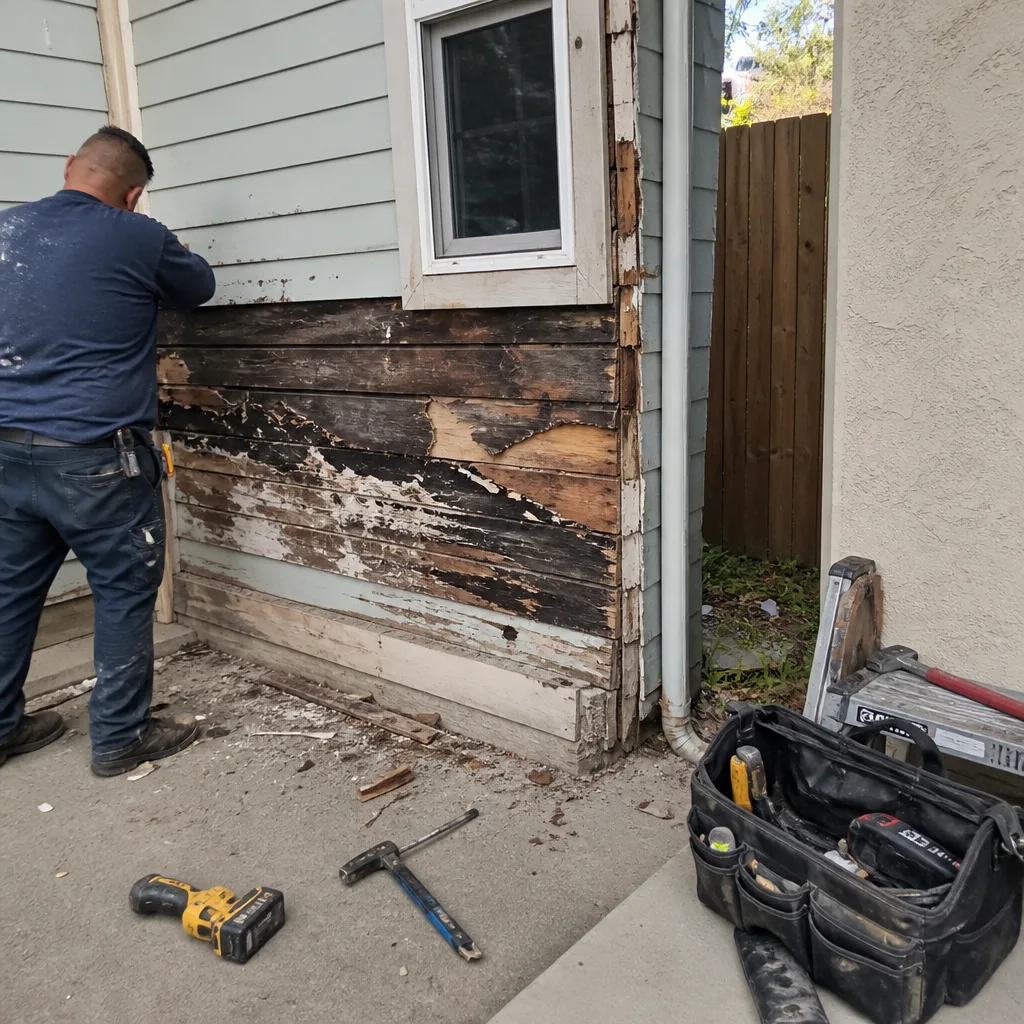 Before
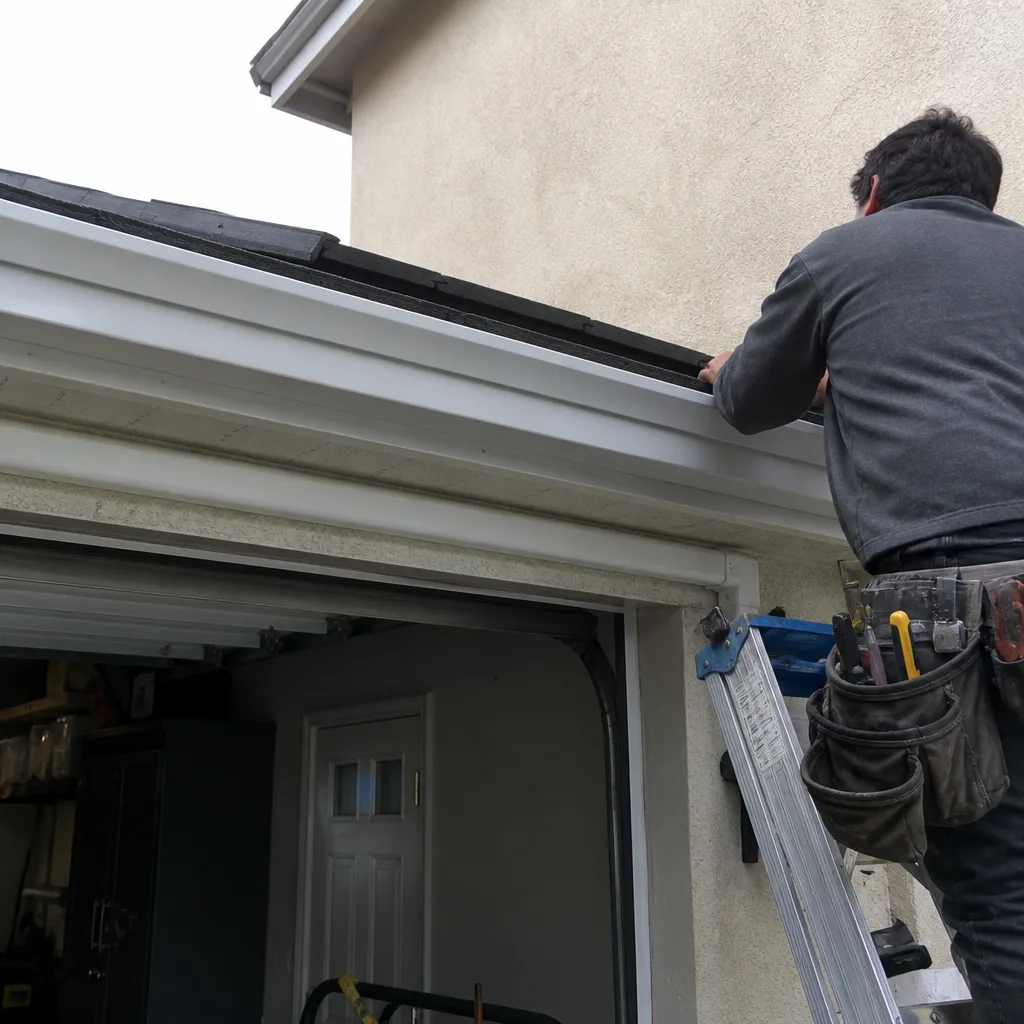 After
 Before
 After
 Before
 After